
Respiratory disorders can be caused by air pollution, allergies, bacterial or fungal infections, genetics, poor diet, smoking, toxins or an unhealthy lifestyle. There are many natural remedies that can alleviate the symptoms of respiratory disorders without the side-effects of conventional drugs.
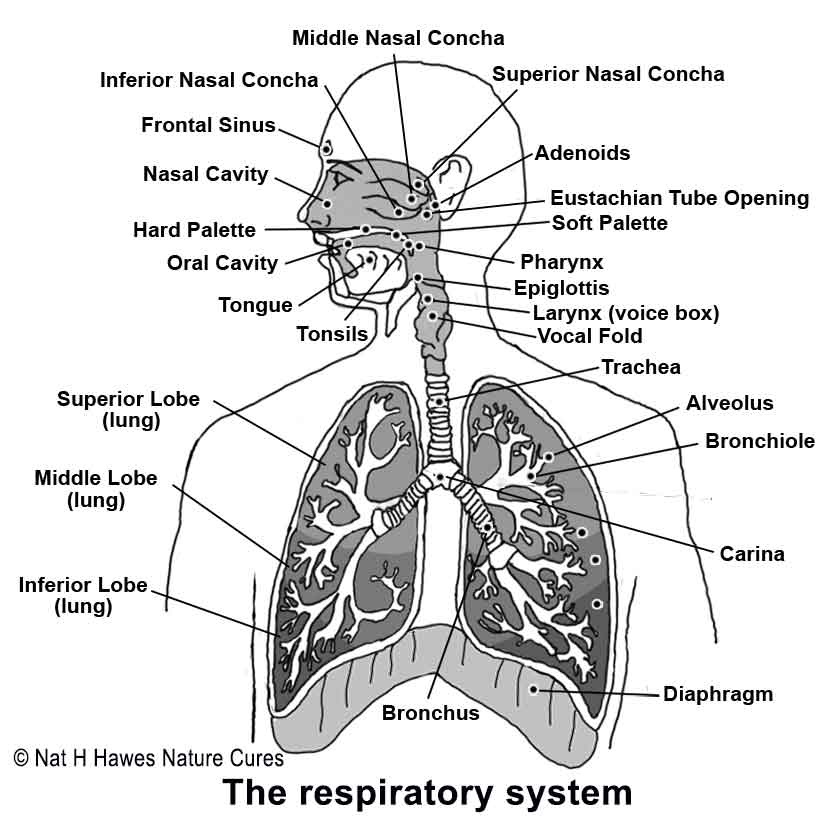
Bacterial infections that can infect the respiratory system
Acinetobacter baumannii (blood or wound infections and pneumonia). Natural antibiotic remedy:
- Lemongrass (Cymbopogon flexuosus)
Aeromonas hydrophila (acute cholecystitis, bacteraemia and septicaemia, cellulitis, eye infections, haemolytic syndrome, kidney disease, meningitis, osteomyelitis, peritonitis, pneumonia and respiratory tract infections, urinary tract infection, wound and soft-tissue infections). Natural antibiotic remedy:
- Rough chaff (Achyranthes aspera)
Bordetella pertussis (pertussis, whooping cough). Natural antibiotic remedies:
- Apple cider vinegar (Malus domestica)
- Echinacea (Echinacea angustifolia, Echinacea purpurea)
- Cinnamon (Cinnamomum zeylanicum)
- Garlic (Allium sativa)
- Ginger (Gingiber officinalis, Zingiber officinale)
- Lemon juice (Citrus limonum)
- Lime juice (Citrus aurantifolia), turmeric
Branhamella catarrhalis (upper respiratory tract infection). Natural antibiotic remedies:
- Elderberry (Sambucus nigra)
- Eyebright (Euphrasia officinalis)
Corynebacterium diphtheriae (diphtheria, upper respiratory disease). Natural antibiotic remedies
- Aloe vera (Aloe barbadensis)
- Golden rod (Solidago)
- Hu huang lian (Coptis chinensis)
Erwinia carotovora (a plant pathogen in potatoes and cyclamen which can cause pharyngitis, upper respiratory tract infection or urinary tract infection in humans). Natural antibiotic remedies:
- Fennel seeds (Foeniculum vulgare)
- Marjoram (Origanum majorana)
Klebsiella pneumoniae (lung infection). Natural antibiotic remedies:
- Acacia (Acacia karroo)
- Cape ash bark (Ekebergia capensis)
- Cumin (Cuminum cyminum)
- Curry leaves (Murraya koenigii)
- Fennel (Foeniculum vulgare)
- Marshmallow root (Alcea diditata, Althea officinalis)
- Pau d’arco (Tabebuia serratifolia, Tabebuia impetiginos)
- Sour plum (Ximenia caffra)
- Turkey berry (Solanum torvum)
- Water lily (Nymphaea caerulea, Nymphaea nouchali)
- Wisteria (Bolusanthus speciosus)
Lactobacillus acidophilus (arthritis, bloating, blockage of a lung artery, diarrhoea, disease of the oesophagus, heart inflammation, liver infection, skin reactions, stomach cramping, stomach lining inflammation, stomach and vaginal burning and discomfort). Natural antibiotic remedies:
Moraxella (infections of the central nervous system, eye, joints, middle ear and respiratory system). Natural antibiotic remedy:
- Marjoram (Origanum majorana)
Mycobacterium abscessus (lung disease, cystic fibrosis sufferers at most risk of this infection). Natural antibiotic remedies:
Mycobacterium leprae (leprosy, Hansen’s disease, granulomatous disease of the peripheral nerves and mucosa of the upper respiratory tract). Natural antibiotic remedies:
- Gotu kola (Centella asiatica)
- Hops (Humulus lupulus)
- Turkey berry (Solanum torvum)
- Usnea (Usnea lapponica)
Mycobacterium tuberculosis (tuberculosis). Natural antibiotic remedies:
- Alfalfa (Medicago sativa)
- Chamomile (Chamomilla recutita)
- Cloves (Syzygium aromaticum, Eugenia caryophyllata)
- Echinacea (Echinacea purpurea, Echinacea angustifoli)
- Elecampane (Lula helenium)
- Figwort (Scrophularia nodosa)
- Garlic (Allium sativa)
- Golden rod (Solidago)
- Honeysuckle (Lonicera pericylmenum, Lonicera japonica)
- Hops (Humulus lupulus)
- Hu huang lian (Coptis chinensis)
- Liquorice root (Glycyrrhiza glabra)
- Lomatium dissectum (Lomatium cous, lomatium geyeri, lomatium macrocarpum, lungwort (Pulmonaria officinalis)
- Mucura (Petiveria alliacea)
- Pau d’arco (Tabebuia serratifolia, Tabebuia impetiginos)
- Phyllanthus amarus (Phyllanthus niruri)
- Propolis (beeswax)
- Tarragon (Artemisia dranunculus)
- Turkey berry (Solanum torvum)
- Usnea (Usnea lapponica)
Pseudomonas spp. (various including bacteraemia, lung infections, pneumonia and urinary tract infection). Natural antibiotic remedies:
- Aloe vera (Aloe barbadensis)
- Arctic snow (Wrightia tincturia)
- Blessed thistle (Cnicus benedictus)
- Cranberries (Vaccinium macrocarpon)
- Cumin (Cuminum cyminum)
- Dandelion root (Taraxacum officinale)
- Fennel seeds (Foeniculum vulgare)
- Garlic(Allium sativa)
- Juniper berries (Juniperus communis)
- Mucura (Petiveria alliacea)
- Mugwort (Artemisia vulgaris)
- Mullaca (Physalis angulate)
- Tarragon (Artemisia dranunculus)
- Turkey berry (Solanum torvum)
Pseudomona aeruginosa (blood, ear, eye and lung infections, pneumonia, skin rashes, urinary tract infection). Natural antibiotic remedies:
- Arctic snow (Wrightia tincturia)
- Fennel seeds (Foeniculum vulgare)
- Garlic (Allium sativa)
- Juniper berries (Juniperus communis)
- Lemongrass (Cymbopogon flexuosus
- Moringa (Moringa oleifera)
- Mucura (Petiveria alliacea)
- Mugwort (Artemisia vulgaris)
- Mullaca (Physalis angulate)
- Nutmeg (Myristica fragrans)
- Tarragon (Artemisia dranunculus)
- Turkey berry (Solanum torvum)
Streptococcus pyogenes (arthritis, bone infections, cellulitis, impetigo, kidney disease, otitis, pharyngitis, respiratory disease, rheumatic fever, scarlet fever, sinusitis, tonsillitis). Natural antibiotic remedies:
- Astragalus (Astragalus membranaceous)
- Cloves (Syzygium aromaticum, Eugenia caryophyllata)
- Dandelion root (Taraxacum officinale)
- Echinacea (Echinacea purpurea, Echinacea angustifoli)
- Elderberry (Sambucus nigra)
- Eyebright (Euphrasia officinalis)
- Golden rod (Solidago)
- Honeysuckle (Lonicera pericylmenum, Lonicera japonica)
- Mucura (Petiveria alliacea)
- Mugwort (Artemisia vulgaris)
- Mullaca (Physalis angulate)
- Perilla leaves (Perilla frutescens)
- Poke root (Phytolacca americana, Phytolacca decandra)
- Usnea (Usnea lapponica)
Respiratory system conditions
Asthma
When an asthma sufferer comes into contact with something that irritates their airways (an asthma trigger), the muscles around the walls of the airways (bronchial tubes) tighten so that the airways become narrower and the lining of the airways becomes inflamed and starts to swell. Sometimes, sticky mucus or phlegm builds up, which can further narrow the airways, making it difficult to breathe and leading to symptoms of asthma. See>> Asthma
Bronchitis, catarrh and coughs
Bronchitis is a chest infection of the main airways of the lungs (bronchi), which causes them to become irritated and inflamed. The main symptom is a cough which may bring up yellow-grey mucus and this sticky mucus is produced by the body as a protection and to bind to the bacteria or viruses, causing the infection, and bring them up out of the lungs. See>> Bronchitis, catarrh and coughs
Chronic obstructive pulmonary disease
COPD is the name for a collection of lung diseases including chronic bronchitis, emphysema and chronic obstructive airways disease. People with chronic bronchitis often develop another smoking-related lung disease called emphysema where the air sacs inside the lungs become damaged, causing shortness of breath. People with COPD have difficulties breathing, primarily due to the narrowing of their airways, this is called airflow obstruction.
Typical symptoms of COPD
- Increasing breathlessness when active
- A persistent cough with phlegm
- Frequent chest infections
Stopping smoking, changing to a healthy nutritious diet and taking regular exercise can strengthen the lungs and reverse the damage that is done but it can take two years on a strict regime to repair.
In some cases, the smoker has left it too late and this can then lead to further disorders such as circulation and digestive problems. It can also lead to obesity and the related ailments due to being unable to take physical exercise due to shortness of breath. See Natural remedies for all respiratory disorders below.
Cystic fibrosis
Also known as CF or mucoviscidosis, cystic fibrosis is an inherited disease of the glands, including mucus and sweat glands. It mostly affects the lungs, pancreas, liver, intestines, sinuses and sex organs but it doesn’t affect the brain. There are around 9,000 people with cystic fibrosis in the UK although around one in 25 people carries the faulty gene which causes the condition. See the Cystic Fibrosis page for more information.
Emphysema
Emphysema is a type of chronic obstructive pulmonary disease (COPD) involving damage to the air sacs (alveoli) in the lungs. As a result, the body does not get the oxygen it needs. Emphysema makes it hard to catch the breath. It may also be accompanied by a chronic cough and problems with breathing during exercise. The most common cause is cigarette smoking. Stopping can help prevent it from developing. If already suffering with emphysema, not smoking might keep it from getting worse.
See Natural remedies for all respiratory disorders below.
Lung cancer
Foods which have particularly shown to help protect against and treat lung cancer:
- Okra
- Onions
- Papaya
- Peas
- Persimmons fruit
- Peaches
- Orange rind
- Raspberries
- Soursop
- Strawberries
- Sweet potatoes
- Tangerines
- Turmeric
- Watercress
- Watermelon
- Winged beans
Betulinic acid is a powerful antibacterial, antifungal, antivirus and tumour fighting compound which can treat actinic keratosis, breast, cervical, colorectal, lung, melanoma, prostate and skin cancers. It is also anti-inflammatory and a natural diuretic. It can be found in the following:
- Birch bark
- Chaga mushrooms
- Winged beans
There are many more foods and nutrients that can prevent and treat all cancers see>> Cancer
Pneumonia and pleurisy
Pneumonia is a chest infection which refers to the acute inflammation of the lungs. It is one of the most serious infectious diseases. A common complication of all kinds of pneumonia is pleurisy. Pleurisy is an inflammation of the pleura, a serous membrane which envelopes the lungs and also lines the inside of the chest. To find out more and what particular foods and remedies are good to treat these conditions see>> Pneumonia and pleurisy
Pulmonary oedema
When the heart is not working correctly, pulmonary oedema is likely to occur. The main job of the heart is to take pure oxygenated blood from the lungs that enters through the pulmonary veins. It is then delivered to various parts of the body through a large artery known as aorta.
In some cases, the heart becomes ineffective in delivering sufficient blood to different organs. Poor functioning of the heart causes the blood in the pulmonary veins to back up. The blood moving in the opposite direction puts excessive strain on these veins. Due to this excessive pressure, the veins start leaking.
As these veins pass through the lungs, the fluid that comes out, finds its way into the alveoli. This fluid disrupts the normal flow of oxygen through the lungs leading to shortness of breath.
People suffering from congestive heart failure, defective heart valves, cardiomyopathy or those with a history of heart attacks may also eventually develop pulmonary oedema.
What to avoid when suffering from pulmonary oedema
- Alcohol
- Anchovies
- Aspartame (artificial sweetener)
- Bacon and ham
- Bananas
- Chocolate
- Crisps and other salty snacks
- Ginseng
- Homogenised products
- Meat
- Non-organic foods
- Potato chips
- Sausages
- Salt
- Shellfish
- Sugar
- Tinned meats
- Tinned or pre-made soups
- White flour
- Yohimbine (herb)
NOTE: Because sodium aggravates fluid on the lungs it should be reduced in the diet.
Highest sources of sodium in milligrams per 100 grams
- Table salt 38758 mg
- Bicarbonate of soda 27360 mg
- Stock cubes 24000 mg
- Soya sauce 5586 mg
- Chilli powder 4000 mg
- Miso 3728 mg
- Anchovies 3668 mg
- Yeast extract 2962 mg
- Capers 2769 mg
- Processed meats (salami etc) 2260 mg
- Processed cheese 1798 mg
- Caviar 1500 mg
- Crab 1072 mg
- Spirulina 1048 mg
- Whey 1079 mg
- Margarine 943 mg
- Olives 735 mg
- Salted peanuts 667 mg
Remedies for pulmonary oedema and fluid on the lungs
Red clover and golden seal herbs decrease congestion and thin the blood. Turmeric, ginger and cumin thin the blood naturally.
Foods containing magnesium, vitamin B1, vitamin E and coenzyme Q10 will reduce fluid on the lungs and may be lacking in the diet especially if diuretic medication is being taken.
Rheumatoid arthritis-associated interstitial lung disease
Rheumatoid arthritis does not just affect the joints, it can also damage the tissue surrounding the joints, as well as the eyes, heart and lungs. Besides the joints, the heart and lungs are the most commonly affected and can be potentially serious and even fatal.
Rheumatoid arthritis-associated interstitial lung disease, (RA-ILD), is the most serious lung complication for people with rheumatoid arthritis. This illness can be hard to detect but occurs when lung tissue becomes inflamed and eventually scarred. Men are at higher risk than women for this disease. Although non-smokers can and do develop RA-ILD, smoking seems to increase risk. RA-ILD may cause breathlessness and dry cough, but in many cases, it causes no symptoms at all, making early detection difficult.
Inflammation caused by RA-ILD, can lead to pulmonary fibrosis or permanent scarring of the respiratory tissues. This can cause shortness of breath, as healthy air sacs are replaced by scar tissue. Supplemental oxygen can help make breathing easier but will not reverse the damage done by pulmonary fibrosis.
NOTE: Methotrexate (Rheumatrex, Trexall) is a medication often used to treat rheumatoid arthritis that can cause pulmonary fibrosis.
Rheumatoid arthritis can also cause nodules to form in the throat and on the vocal cords, causing complications like hoarseness and other changes. Nodules can develop in the lungs as well but usually do not cause symptoms and patients may never notice them.
Damage to the lining of the lung, or the pleura, affects more than half of all people with rheumatoid arthritis, but few actually experience symptoms. Others may develop pleurisy, or inflammation of the pleural tissue that can cause chest pain and difficulty breathing.
Effusions may also occur that is fluid build-up in the pleural space around the lungs, and this can lead to a persistent cough, shortness of breath and, in some cases, a collapsed lung.
People that have rheumatoid arthritis and experience shortness of breath, coughing or other respiratory symptoms should see their health practitioner to be checked very quickly as these symptoms can become serious. See natural remedies for all respiratory disorders below.
Sarcoidosis
The cause of sarcoidosis is unknown, but it is thought that biofilm bacteria cause small patches of red and swollen tissue, called granulomas, to develop in the organs of the body. It can develop in any organs but usually starts in the lungs and lymph nodes. The disease can appear suddenly and disappear, or it can develop gradually and go on to produce symptoms that come and go, sometimes for a lifetime. see>> Sarcoidosis
Tuberculosis
Tuberculosis (TB) is a severe bacterial lung infection which can cause fluid to accumulate inside the lungs. But in most cases, TB causes excess build-up of fluid around the lungs and is also referred to as pleural effusion or ‘fluid on lungs’. For more information and natural remedies for TB see>> Tuberculosis
Whooping cough
Whooping cough, also known as pertussis or the 100-day cough, is highly contagious and caused by an infection with a bacterium known as Bordetella pertussis. The bacteria attach to the lining of the airways in the upper respiratory system and release toxins that lead to inflammation and swelling. It afflicts children and adults, whether vaccinated or not, and although it used to be assigned to early spring and summer, recently it is appearing at nearly anytime of the year. For more information and natural remedies see>> Whooping cough
Natural remedies to treat all respiratory system disorders
Eat well: Lose any extra weight and do regular gentle exercises to strengthen the heart and lungs.
Remove chemicals: Take all perfumes and artificial chemicals out of the home. Use only natural soaps, detergents, cosmetics and deodorants. For natural alternatives see>> Hygiene, toxins and health
Drink ginger ale: Caffeinated beverages may irritate the stomach, so ginger can help. The carbonation releases any trapped gas in the chest and the ginger helps with nausea that may sometimes accompany asthma.
Avoid stress: Avoid emotional stress as much as possible.
Take a hot shower with the shower head on the most forceful and hottest setting. Sit down so that the back is to the water and allow it to ‘beat on the back’. The steam is good to breathe in and the pounding helps loosen the phlegm. Some fresh branches of eucalyptus can be tied up and hung in the shower and inhaling the steam from this will also help.
Drink tea: especially green tea. (three cups a day) Caffeine helps to dilate the bronchial airways. Avoid coffee though as it causes many adverse side effects. See Coffee Dangers.
Make a herbal tea:
- Two cups of bottled or filtered boiling water
- Two teaspoons of powdered Indian root
- Two teaspoons of granulated echinacea root
- Two teaspoons of elecampane root
Mix all ingredients and let them stand for one hour. Strain then gently reheat and sip slowly.
To improve breathing make this tea:
- One quart bottled or filtered boiling water
- One teaspoon of chamomile flowers
- One teaspoon of echinacea root
- One teaspoon of mullein leaves
- One teaspoon of passionflower leaves
Method
Mix all ingredients and let them stand for one hour. Strain and then gently reheat and sip slowly. Freshly squeezed lemon and honey can be added to all teas for taste and additional benefits to the lungs.
Natural cough remedy
- 400 ml. of water
- Two ripe organic bananas
- Half the juice of one lemon
- Two tablespoons of raw organic honey
Method
- Heat the water in a pan until it reaches boiling point then let it cool for five to ten minutes.
- Mash the bananas in a bowl and add the water and mix.
- Then add the honey and lemon and mix again then store in the refrigerator in a large airtight jar.
- Shake the jar well then warm one tablespoon of the mixture gently (do not boil) and consume four times a day with one dose being just before bed.
Natural foods to prevent and treat respiratory disorders
Apples: The flavonoids and variety of vitamins contained in apples maintain healthy respiratory function and prevent the development of lung diseases.
Berries are one of the richest antioxidant fruits, containing the polyphenols, anthocyanins and the flavonoids beta-carotene, lutein and zeaxanthin. These antioxidants protect the lungs from cancer, disease and infection. Dark coloured berries especially protect against lung cancer.
Garlic contains a high level of allicin which reduces inflammation and fights infection. It destroys free radicals and can help to improve asthma. Always allow garlic to stand for tenminutes after chopping to allow the chemical process that produces allicin.
Grapefruit contains flavonoids that can for clean out lungs that have been affected by carcinogens but be aware that grapefruit can interact with certain medications.
Herbs and spices: Red clover and golden seal herbs decrease congestion and thin the blood. Turmeric, ginger and cumin have antimicrobial properties and reduce inflammation and thin the blood naturally.
Marshmallow is a potent herbal remedy for cough, sore throat and other respiratory problems such as bronchitis and whooping cough (pertussis). This is due to the large amounts of mucilage found in the flower as well as the root.
Daikon, shiitake mushrooms and kombu seaweed. A tea made with these three ingredients can be used to lower fever and fight chest infections.
Radish and carrot juice: The juice of radishes blended with carrot juice is a wonderful aid in cleansing and healing the mucous membrane of the digestive system as well as of the respiratory organs.
Passion fruit contains components which have the ability to relax the nerves and relieve coughs, hoarseness and sore throats.
Pomegranate: The nutritionally dense properties of this antioxidant fruit can slow down the development of lung issues including tumour development as well as lower cholesterol, reduce plaque build-up on artery walls and aid in weight loss.
Sweet potatoes: Most smokers have a lack of vitamin A and have problems with emphysema (air sacs damage). Sweet potatoes rejuvenate the respiratory system and prevent emphysema because of the high amounts of carotenoids that they contain. 100 g tuber provides 19218 µg of vitamin A and 8509 µg (micrograms) of beta-carotene.
Turmeric is similar to ginger in its lung health benefits with anti-inflammatory properties. As an added bonus the high amounts of curcumin can lead to the elimination of cancer cells.
Usnea is used for acute and chronic lung infections, such as pneumonia, and for treating colds and influenza, and as a helpful supplement alongside tuberculosis (TB) treatment.
Medicinal herbs that can protect and help to treat respiratory orders
- Lemongrass
- Liquorice root
- Mullien
- Noni plant
- Paico leaf
- Pan pien lien
- Passionflower
- Pau d’arco
- Peppermint tea
- Periwinkle
- Pine needle tea
- Red clover
- Slippery elm
- Yerba sant
How to reverse lung damage due to smoking and vaping tobacco
Making teas from the following herbs and inhaling the steam while they steep for ten minutes and drinking one cup two or three times a day can help to break up the phlegm and remove the tar from lungs after years of smoking. These herbs are also useful for other lung disorders such as bronchitis etc. Add honey for more antibacterial benefits.
- Coltsfoot (Tussilago farfara)
- Indian tobacco (Lobelia Inflata)
- Liquorice root (Glycyrrhiza glabra)
- Lungwort (Pulmonaria)
- Mullien (Verbascum sinuatum)
What nutrients can protect and help to treat lung disorders?
Antioxidants: Cruciferous vegetables (brassicas) have a very high antioxidant content which cleanses the system and protects the lungs. Choose at least one of the following to include in the diet at least once a day.
- Bok choy
- Broccoli
- Brussel sprouts
- Cabbage
- Cauliflower
- Collard greens
- Cress
- Daikon
- Horseradish
- Kale
- Kohlrabi
- Mustard greens
- Radish
- Rapeseed
- Rocket
- Shepherd’s purse
- Swede
- Sweet potato
- Turnip
- Wasabi
- Watercress
Quercetin is a plant flavonoid which can help to alleviate asthma, eczema, hay fever and sinusitis. It also lowers the blood pressure and lowers the risk of cardiovascular disease and lung cancer especially in heavy smokers.
Natural sources of Quercetin in alphabetical order
- Aniseed
- Apples
- Berries
- Broccoli,
- Citrus fruits
- Dill
- Fennel
- Honey
- Kale
- Olive oil
- Onions
- Red wine
- Scallions
- Tea
NOTE: Brown and red algae such as Nostoc ellipsosporum, Limnothrix obliqueacuminata, and Microcheate tenera, as well as in seaweed like Chondrus crispus and Undaria pinnatifida (wakame) are particularly rich in Quercetin.
Foods containing magnesium, vitamin B1, vitamin E and coenzyme Q10 will reduce fluid on the lungs and improve lung function and may be lacking in the diet especially if diuretic medication is being taken. Natural food sources of therse nutrients are better to consume than supplements. Carotenoid supplements are especially harmful to smoker’s and have been reported to actually increase the risk of developing cancer.
Highest sources of coenzyme Q10 in micrograms per 100 grams
- Venison 158 µg
- Beef heart 113 µg
- Soybean oil 92 µg
- Rapeseed oil 65 µg
- Sardines 64 µg
- Mackerel 43 µg
- Pork 24 – 41 µg
- Beef liver 39 µg
- Beef 31 – 37 µg
- Sesame oil 32 µg
- Soybeans 30 µg
- Peanuts 27 µg
- Cuttlefish 24 µg
- Sesame seeds 23 µg
- Chicken 14 – 21 µg
- Mackerel 21 µg
- Pistachios 20 µg
- Walnuts 19 µg
- Soybeans (dried) 19 µg
- Adzuki beans, hazelnuts 17 µg
- Tuna fish (tinned), herring 16 µg
- Pollack, almonds 14 µg
- Eel 11 µg
- Spinach 10 µg
- Perilla leaves 10 µg
- Broccoli, rainbow trout 9 µg
- Chestnuts 6 µg
- Rice bran 6 µg
- Sunflower oil, olive oil, safflower oil, sweet potato, wheat germ 4 µg
- Garlic, peas, radish leaves, 3 µg
- Aubergine, beans, bell peppers, blackcurrants, cabbage, carrots, cauliflower, cheese, eggs, yoghurt 2 µg
- Apples, buckwheat, Chinese cabbage, millet, onions, oranges, radish roots, strawberries 1 µg
Magnesium rich foods are commonly recommended to people who suffer from asthma issues. It can increase lung capacity and build on the efficiency of the respiratory process.
Highest sources of magnesium in milligrams per 100 grams
- Rice bran 781 mg
- Basil, coriander, dill and sage 694 mg
- Hemp seeds 640 mg
- Pumpkin and squash seeds 535 mg
- Raw cocoa 499 mg
- Flaxseeds 392 mg
- Brazil nuts 376 mg
- Sesame seeds 353 mg
- Sunflower seeds 346 mg
- Chia seeds 335 mg
- Chlorella 315 mg
- Wheat germ 313 mg
- Cashew nuts 292 mg
- Almonds 268 mg
- Caraway seeds 258 mg
- Black strap molasses and dulse 242 mg
- Buckwheat 231 mg
- Spirulina 189 mg
- Oats 177 mg
- Durum wheat 144 mg
- Macadamia nuts 130 mg
- Adzuki beans 127 mg
- Kelp 121 mg
- Millet 114 mg
- Kale 88 mg
- Amaranth 65 mg
- Globe artichoke 60 mg
- Okra and nettles 57 mg
- Chestnuts 54 mg
- Rocket 47 mg
- Dates 43 mg
- Plantain 37 mg
- Lentils 36 mg
- Butternut squash 34 mg
- Coconut 32 mg
- Potatoes with skin 30 mg
- Passion fruit 29 mg
- Savoy cabbage, halibut 28 mg
- Bananas, rabbit 27 mg
- Green beans 25 mg
- Peas 24 mg
- Raspberries 22 mg
- Guava 22 mg
- Blackberries 20 mg
- Courgettes 18 mg
- Kiwi fruit, fennel, figs 17 mg
- Endive 15 mg
- Cucumber, lettuce 13 mg
Highest sources of Vitamin B1 in milligrams per 100 grams
- Yeast extract 23.38 mg
- Brewer’s yeast 11 mg (dependent upon source check label)
- Rice bran 2.75 mg
- Wheat germ 1.88 mg
- Sesame seeds 1.21 mg
- Sunflower seeds 1.48 mg
- Coriander leaves 1.25 mg
- Pine nuts 1.24 mg
- Peanuts 0.44 mg
- Shiitake mushrooms 0.3 mg
- Okra 0.2 mg
- Globe artichoke 0.20 mg
- Beetroot greens 0.12 mg
- Sprouted beans 0.39 mg
- Spinach 0.10 mg
Vitamin E: Foods rich in vitamin E must be taken in equal amounts to vitamin C-rich foods, or an imbalance of minerals such as iron, manganese and zinc may occur. All these nutrients are important for good lung function and recovery from lung disorders.
Highest sources of vitamin E in milligrams per 100 grams
- Wheat germ 149.4 mg
- Hemp seeds 55 mg
- Hazelnut oil 47 mg
- Almond oil 39 mg
- Sunflower seeds 38.3 mg
- Chilli powder 38.1 mg
- Paprika 38 mg
- Rice bran oil 32 mg
- Grape seed oil 29 mg
- Almonds 26.2 mg
- Oregano 18.3 mg
- Hazelnuts 17 mg
- Flaxseed oil 17 mg
- Peanut oil 16 mg
- Hazelnuts 15.3 mg
- Corn oil 15 mg
- Olive oil 14 mg
- Soya bean oil 12 mg
- Pine nuts 9.3 mg
- Cloves (ground) 9 mg
- Peanuts 8 mg
- Celery flakes (dried) 6 mg
- Spirulina 5 mg
- Dried apricots 4.3 mg
- Bell peppers (red), eel, olives and salmon 4 mg
- Jalapeno peppers 3.6 mg
- Anchovies 3.3 mg
- Broccoli, chicken, chilli peppers (sun-dried), cod, crayfish, dandelion greens, egg yolk, duck, goose, pecan nuts, spinach, tomatoes (tinned or pureed) turkey and turnip greens 3 mg
- Avocado, beef, bilberries, blue berries, butter, chicory greens, cinnamon (ground), crab, halibut, herring (pickled), mackerel, marjoram, mustard greens, pistachio nuts, poppy seeds, sardines, sesame seeds, Swiss chard, trout, tuna, turnips and walnuts 2 mg
- Fish roe 1.9 mg
- Asparagus, kiwi fruit and parsnips 1.5 mg
- Black berries 1.2 mg
- Chlorella 1.1 mg
Vitamin C: Foods that contain high amounts of vitamin C help the lungs effectively transport oxygen throughout the body and can effectively fight off the tuberculosis bacteria and other lung infections.
Highest sources of Vitamin C in milligrams per 100 grams
- Acerola cherries 1677.6 mg
- Camu camu berries 532 mg
- Rosehips 426 mg
- Green chillies 242.5 mg
- Guavas 228.3 mg
- Yellow bell peppers 183.5 mg
- Black currants 181 mg
- Thyme 160.01 mg
- Red chillies 143.7 mg
- Drumstick pods 141 mg
- Kale 120 mg
- Jalapeno peppers 118.6 mg
- Kiwi fruit 105.4 mg
- Sun dried tomatoes 102 mg
- Broccoli 89 mg
- Brussel sprouts 85 mg
- Cloves, saffron 81 mg
- Chilli pepper 76 mg
- Mustard greens 70 mg
- Cress 69 mg
- Persimmons fruit 66 mg
- Swede 62 mg
- Basil 61 mg
- Papaya 60 mg
- Rosemary 61 mg
- Strawberries 58 mg
- Chives 58 mg
- Oranges 53.2 mg
- Lemons 53 mg
- Pineapple 48 mg
- Cauliflower 48 mg
- Kumquats 43.9 mg
- Watercress 43 mg
- Wasabi root 41.9 mg
- Kidney bean sprouts 38.7 mg
- Melon 36.7 mg
- Elderberries 36 mg
- Coriander 27 mg
Vitamin A: Most smokers have low levels of vitamin A and have problems with emphysema (air sacs damage). Sweet potatoes rejuvenate the respiratory system and prevent emphysema because of the high amounts of carotenoids that they contain. 100 g tuber provides 19218 µg of vitamin A and 8509 µg (micrograms) of beta-carotene, the precursor to vitamin A.
NOTE: Carotenoid supplements should be avoided by smokers as they have been proven to increase the risk of lung cancer. This is not the case with foods rich in carotenoids.
To benefit from foods containing carotenoids like tomatoes and carrots always eat together with fat-rich foods like olive oil, nuts or avocado because carotenoids are fat-soluble, meaning they are only absorbed into the body along with fats and are then converted into the essential vitamin A nutrient.
Natural sources of preformed vitamin A in alphabetical order
- Beef
- Cheese
- Cod liver oil
- Crab
- Cuttlefish
- Egg yolks
- Fish and fish eggs
- Game birds
- Lamb
- Lobster
- Milk (full cream)
- Organ meats
- Rabbit
- Shellfish
- Venison
Omega-3 fatty acids: Foods rich in omega-3 fatty acids are particularly protective of the lungs and there are four types of these. Eicosapentaenoic acid (EPA) and docosahexaenoic acid (DHA) fatty acids are among the most documented in nutrition research. However, a third key fatty acid, docosapentaenoic acid (DPA) has recently been shown to play probably the most powerful role in key health outcomes and all three are found in sea foods. Linolenic acid is the omega-3 fatty acid that comes from plants.
Natural sources of DHA, DPA and EPA omega-3 fatty acids in alphabetical order
- Algae
- Carp fish
- Cod
- Cod liver oil
- Halibut
- Krill oil
- Menhaden
- Oily fish
- Octopus
- Shellfish
- Squid
- Swordfish
NOTE: It is worth consuming coriander, leafy greens, sulphur-rich foods as well as algae and seaweeds when consuming sea foods due to the mercury contamination that exists in the oceans as these can chelate (bind to) mercury and eliminate it from the body.
Natural sources of linolenic omega-3 fatty acids from plant foods in alphabetical order
- Black seeds
- Borage
- Chia seeds
- Durum wheat
- Endive
- Flaxseeds
- Hemp seeds
- Kale
- Maqui berry
- Melon
- Millet
- Mustard greens and seeds
- Oats
- Pepperwort
- Poppy seeds
- Pumpkin seeds
- Rapeseed
- Raspberries
- Rye
- Soya beans
- Sumac
- Swede
- Walnuts
NOTE: Non-heme iron is found in tea and dark green leafy vegetables like spinach and kale. However, tea and green leafy vegetables also contain oxalates that block the absorption of iron. To assist the body in the absorption of non-heme iron eat a couple of strawberries, an orange, tangerine or some mango at the same time.
External remedies for respiratory disorders
To inhale the vapours from the remedies below pour boiling water into a small basin then add the remedies chopped up. Then place a towel over the head and the bowl and breathe in the vapours keeping the eyes closed. This will provide great relief from the chest pain that can accompany pleurisy and pneumonia.
There are various types of poultices that can be used to treat a wide variety of complaints from acne, arthritis and respiratory conditions to bruises and sprains. Some people advocate the use of porridge, carrot, bread, milk, potatoes, clay, cabbage and herbal poultices and many use poultices as a home remedy for their horses’ ailments. A poultice will also help ease out anything that’s embedded under the skin such as wood or metal splinters and can also bring boils or abscesses to the surface and draw out bee sting poison.
A homemade poultice is made by mashing herbs, plant material or another substance with warm water or natural oils to make a paste. Pure pressed coconut oil is especially good to use. The paste can be applied directly to the skin and covered with a piece of clean cloth. If the herb used is potent such as onion, garlic, ginger, mustard, etc., it is advisable to place a layer of thin cloth between the skin and the herb. The cloth can then be covered with plastic wrap to hold in the moisture. The poultice should be changed every 3 to 4 hours or more if it dries out. Then the area should be washed with soap and dried thoroughly and left uncovered.
A compress is used the same way, but usually warm liquids are applied to the cloth instead of raw cold substances. Tinctures or herbal infusions are great for compresses. The following can provide relief from congestion and help to break up mucous in the chest.
- Bay leaf (hot or cold fomentation compress)
- Comfrey (hot or cold fomentation compress)
- Eucalyptus (vapours)
- Garlic (hot or cold fomentation compress)
- Mint (vapours)
What to avoid with respiratory disorders
- Artificial food additives. See E number dangers
- Chemicals in household cleaners and cosmetics. See Hygiene, toxins and health
- Chocolate (milk or white)
- Dust mites
- Ginseng (herb)
- Homogenised or tinned meats, vegetables and soups
- Non-organic foods
- Potato crisps
- Processed meats see>> Processed meat dangers
- Shellfish
- Stress
- Sugar
- Table salt (use Himalayan pink crystals only)
- Tobacco smoke,
- White flour (use wholegrain only),
- White rice (use brown rice only)
- Yohimbine.(herb)
Related subjects
- A-Z of ailments
- Anti-microbial and healing plants and foods
- Bacterial infections
- Feed your friendly bacteria
- Virus infections