
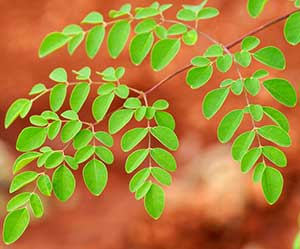
Also known as Moringa oleifera, ben oil tree, benzoil tree, drumstick leaves, horseradish tree)
Moringa is a tree native to parts of Africa and Asia, and the name is derived from murungai/muringa, the Tamil/Malayalam word for drumstick. Currently, most moringa comes from India, but it is also found in Thailand, the Philippines, Africa and Taiwan. The taste resembles horseradish which led to its nickname of the horseradish tree.
Buy Organic Moringa, Award Winning Premium Pure Leaf Powder from Amazon #Ad
Many underdeveloped countries rely on the moringa to help with their malnutrition problems and some humanitarian aid organisations use it to help keep people’s nutrition levels up and prevent starvation.
The nutrients in moringa leaves are equivalent to seven times the vitamin C in oranges, three times the potassium in bananas, two times the protein in milk, four times the vitamin A in carrots and more iron than in spinach.
The leaves which are rich in vitamins A, C and the B complex, can be cooked like spinach or they can be dried and used in soups or other recipes. The pods can be eaten like nuts and the roots can be diced up and used as a sauce similar to the use of horseradish.
Unusual for plants, moringa is rich in protein containing the eight essential amino acids. It also contains thirty-six of the known anti-inflammatory compounds. It is known to treat anxiety, depression, diabetes, skin disorders and sleep disorders. It can also provide a huge boost in energy and can even help provide a quicker recovery after a workout. It also protects the stomach lining and can treat ulcers, improves digestion and the immune system, improves the mood and lowers blood pressure.
Because of the high calcium, iron and vitamin content, moringa leaves can be used as a wonderful tonic for infants, growing children and young adults, to promote strong and healthy bones and for purifying the bloodstream. To prepare the tonic, moringa leaves should be ground with water, filtered and mixed with milk.
Moringa leaf juice is very beneficial for pregnant women as it can help them with an easier delivery and reduce post-delivery complications. In India, moringa leaves are boiled in water and salt, the water is drained, and the leaves are served with ghee (clarified butter) to lactating mothers to increase breast milk. Six tablespoons of leaf powder will provide nearly all of the woman’s daily iron and calcium needs during breastfeeding. Moringa leaves, flowers, and seeds are also useful in treating sexual problems.
NOTE: Pregnant women should be aware of moringa’s ability to induce miscarriage.
A soup prepared by boiling a handful of leaves in 177 ml of water for five minutes and cooled is served to those with respiratory problems. A little sea salt, black pepper and lime juice can be added to this soup.
A teaspoonful of fresh moringa leaf juice mixed with black strap molasses and a glass of tender coconut water taken two to three times a day is a good remedy for digestive disorders. Drumstick leaf juice is also effective in treating urinary disorders, such as excessive urination.
The leaves are an excellent source of protein that can rarely be found in any other herb or green leafy vegetable. Altogether 100 grams of fresh raw leaves provide 9.8 grams of protein or about 17.5% of the recommended daily amount. Dry, powdered leaves are a very concentrated source of many quality amino acids.
Moringa seeds produce oil, also known as ‘ben oil’, which is a sweet, non-sticky oil that does not become rancid and can be used in salads. The seeds can also be eaten green, roasted, powdered or steeped for tea, or used in curries.
Moringa has antibacterial properties and as such is very useful in preventing infections such as those of the throat, chest and skin. Moringa soup can be prepared from the leaves, flowers and pods and used for this purpose as an antibiotic.
Moringa can act as a cardiac and circulatory stimulant and possesses antibacterial, antifungal, anti-inflammatory, antioxidant, antipyretic (reduces fever), antispasmodic, anti-tumour and diuretic properties. The juice of the moringa flowers can improve the quality and flow of mothers’ milk when breast feeding and is useful for urinary problems as it encourages urination. In Haiti, villagers boil moringa flowers in water and drink the tea as a powerful cold remedy.
If eaten raw, the moringa pods act as a de-wormer and can help to treat liver and spleen problems and relieve pain in the joints.
The roots and the bark have all of the properties described above but are more concentrated so care must be taken when using them as medicines. The roots and bark are used for cardiac and circulatory problems, as a tonic and for inflammation. The bark is also an appetiser and digestive.
The alkaloid spirachin (a nerve paralyser) has been found in the roots and the gum has diuretic, astringent (has a drying, tightening effect on tissues to aid in wound healing) and abortifacient (causes miscarriage) properties and is used to treat asthma.
Buy Organic Moringa, Award Winning Premium Pure Leaf Powder from Amazon #Ad
Significant components in moringa
- All essential amino acids
- Beta-carotene
- Beta-sitosterol
- Caffeoylquinic acid
- Chlorophyll
- Fibre
- Kaempferol
- Oleic acid
- Quercetin
- Spirachin
- Terygospermin
- Zeatin
Vitamins in moringa
- Vitamin A
- Vitamin B1
- Vitamin B2
- Vitamin B3
- Vitamin B5
- VitaminB6
- Vitamin B9
- Vitamin C.
Minerals in moringa
Disorders moringa can help to treat and protect against
- Anaemia
- Brain and mental health disorders (anxiety, depression)
- Asthma
- Arthritis
- Bacterial infections
- Boils
- Bone disorders
- Bronchitis
- Cancer
- Cholera
- Colds
- Colitis
- Cystitis
- Cramp
- Diabetes type 2
- Constipation and diarrhoea
- Digestive disorders
- Dysentery
- Ear infections
- Erectile dysfunction
- Eye infections
- Epilepsy
- Fungal and yeast infections
- Gout
- Heart problems
- High blood pressure
- Hysteria
- Inflammation
- Joint disorders
- Liver disorders
- Malnutrition
- Obesity
- Orchitis
- Parasites and worms
- Poor circulation
- Prostate disorders
- Respiratory disorders
- Rheumatism
- Sexually transmitted diseases
- Scurvy
- Skin disorders
- Sleep disorders
- Spleen disorders
- Stomach ulcers
- Throat infections
- Tuberculosis
- Urinary disorders
- Urinary tract infection
- Varicose veins
- Water retention
Buy Organic Moringa, Award Winning Premium Pure Leaf Powder from Amazon #Ad
External uses of moringa
Used for their antibiotic, antifungal and anti-inflammatory properties, the seeds are roasted, pounded, mixed with coconut oil and applied to the affected area. Seed oil is used for the same purpose. Moringa seeds are effective against the skin-infecting bacteria Staphylococcus aureus and Pseudomonas aeruginosa as they contain the potent antibiotic and fungicide terygospermin.
In Senegal and India, roots are pounded and mixed with salt to make a poultice for treating rheumatism and joint pains. In Senegal, this poultice is also used to relieve lower back or kidney pain.
Moringa seed oil is useful in treating conjunctivitis. Fresh moringa leaf juice mixed with lime juice can be applied to treat pimples, acne and blackheads. Dried and powdered bark of the root can be used for fungal skin infections.
Crushed leaves are also used as a domestic cleaning agent and powdered seeds are used for clarifying honey and sugarcane juice and for purifying water.
Buy Organic Moringa, Award Winning Premium Pure Leaf Powder from Amazon #Ad
Related subjects

Join our mailing list to receive your monthly emailed newsletter with all the latest scientific findings for natural health remedies.