
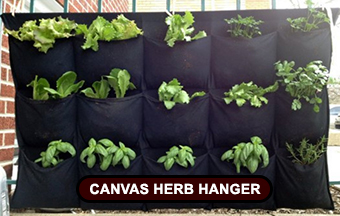
The best way to ensure you and your family and friends only consume organic, untainted and nutrient-rich foods is to grow your own herbs, fruits and vegetables. This can be done in the smallest of plots or even on a balcony, roof garden or windowsill with or pots and other types of planters. Outside, fences, railings and walls can be utilised with canvas pocket planters, mounted boxes and hanging baskets etc.
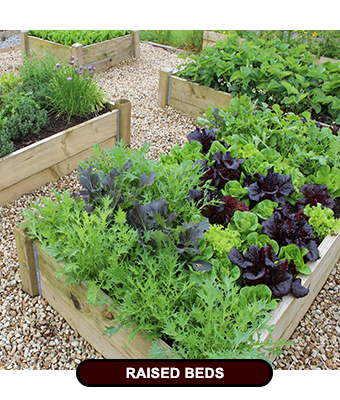
A very good way to grow food, especially for those less able, is to have raised beds built. These can easily be made from old pallets and can be two or three feet high to provide an easily accessed planter even for those that are wheelchair bound.
If these beds are surrounded with gravel and sharp sand paths it will also deter garden pests like slugs and snails. Protect the wood used for planters using wood treatment made from natural linseed oil which has excellent preservative properties and water resistance and is harmless to wildlife and humans.
Planning your organic health food garden
When planning a garden it is important to add as many native plants as possible to support the local wildlife and beneficial insects and bees that will pollinate the herbs, fruits and vegetables you want to grow. Filling your outside space with alien species simply for their looks or colour is a sorry waste of valuable space that could feed native flora and fauna as well as your family and friends.
Growing plants from seeds is very rewarding and, during the first year, seeds can be collected from home-grown plants and are therefore free. Always purchase organic seeds.
The easiest edible plants to begin growing
- Bell peppers
- Chilli peppers
- Broad and runner beans
- Herbs (basil, chives, coriander, dill, parsley, rosemary, thyme)
- Lettuce and other greens
- Peas
- Strawberries
- Sunflowers
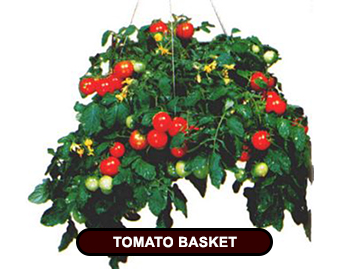
- Tomatoes
These can all be grown in pots or other containers. In small spaces, use a large container or pot with a cane tee pee to grow beans and peas along with sweet peas to help attract pollinating insects.

Potatoes are a good first crop when growing directly in the soil as they will break up the soil and add nutrients future grown vegetables will require.
What many consider as weeds are often very powerful medicinal plants, such as nettles and dandelions. Grow them in a container to stop them spreading.
NOTE: Certain plants should be avoided in the home and garden, if there are animals or young children around, as they are poisonous. See>> Nature cures for pets
Feed your plants
It is important to feed your plants once they are established to gain the most nutrients. These nutrients come out of complex organic matter as soil bacteria breaks it down and are then taken up by the plants.
Ash: Using the ash from a wood-burning stove or having a wood-burning bin in the garden is very useful because the ash from wood can contain many useful nutrients for your food crops, such as calcium carbonate, copper, iron, magnesium, phosphate, potash and zinc.
The amount of each will vary depending on the type of wood burnt. The calcium carbonate in wood ash is very alkaline (meaning it has a high pH), so ashes can be used as an effective liming agent to raise the pH levels in acidic soils. Wood ash is water-soluble, which means it can spread through soil instantly and have an immediate effect on the soil’s pH levels. However, it should never be used where seedlings are to be planted.
Natural plant foods
Ash is also very useful to add to the compost bin as the worms, that will be working very hard to create the soil, thrive better in an alkaline environment.
Plants that like an alkaline soil
- Asparagus
- Juniper
- California lilacs
- Currants
- Forsythia
- Gooseberries
- Mock oranges
- Spirea
- Hellebores
- Clematis
- Dianthus
- Asian persimmon
- Lavender
- Parsley
- Okra
Ash should never be given as a feed or mulch around acid-preferring crops such as blueberries, rhododendrons, potatoes and most other annual vegetables.
NOTE: It is very important to keep the ashes dry when storing as potassium is easily washed out.
Chicken pellets: These have a high nitrogen content and are a good all-round soil improver. Fresh chicken manure must only be added to a compost heap whilst the dried and heat-treated pellets can be added to the soil around most fruits and vegetables especially leafy crops like cabbage, celery, salad crops as well as courgettes, fruit bushes, potatoes, rhubarb and sweet corn.
Comfrey: Comfrey roots gather potassium from the soil and collect it in the leaves. It is therefore worth growing a patch of comfrey, harvesting the leaves of a few plants and mulching around any fruit or rose bushes. Adding comfrey to the compost bin can also help to provide extra potassium. Soaking some comfrey leaves in a bucket of water for a week can provide a good feed for potatoes that need potassium. Growing comfrey from seeds is a cheap way to provide good nutrition for your plant foods.
Compost: It is always a good idea to have your own compost bin, if there is space, to which you can add your organic cuttings and weeds etc. You can also add your kitchen scraps but never put any cooked vegetables or animal products in it as this will attract unwanted vermin into your garden. Egg shells can be added for extra calcium but make sure they are washed well first. Compost helps to provide extra nutrients for your food crops when it is dug into the soil and left for a few weeks before planting seeds or seedlings.
Epsom salts: Add one teaspoon of Epsom salts to four cups of warm water to dissolve it. Then when cool pour into a spray bottle. Use this to spray peppers, roses and tomatoes once then again 10 days later to produce more flowers and fruits due to the magnesium content.
Fish blood and bone meal: Blood meal provides nitrogen and does not take long to break down. Fish meal provides nitrogen and phosphorus, and potassium and bone meal provides mainly phosphorus with some nitrogen and calcium. It is a good all-round fertiliser for fruit bushes and trees, herbs and vegetables and should be added to the soil early in the year before plants become vigorous with leaf growth.
Manure: All types of animal, and even human faeces, are excellent soil improvers as the soil microbes break them down and release the nutrients which then feeds the plants. However, it is important to only use manure that comes from organically reared animals as the antibiotics and other chemicals used in farming can be absorbed by plants and then consumed by humans.
NOTE: Fresh manure must be rotted in a compost heap for twelve months before using on plants. Well-rotted manure can be used to improve the soil before planting and as a mulch after plants are established.
Seaweed such as kelp: This is a very useful fertiliser for mulching plants with as it also deters aphids, slugs and snails as well as greatly improving the soils nutrients. It is always best to keep mulch away from direct contact with the stems of plants.
Water: Rainwater is always best to use for vegetation as it contains many of the nutrients they require so it is a good idea to install water butts on all available drainpipes. Installing an irrigation system is an economical way to water plants as it can work on a timer at night and a humidity sensor can control it and it can also be connected to water butts. This means that plants will always have all the water they need with no effort required. Drip feeds on the soil are best as spraying water loses much to evaporation and can burn the leaves of plants if done during hot sunshine.
Garden pests
A bird feeding station is useful to attract birds as these will consume many garden pests such as caterpillars, slugs and snails. Unfortunately, in many urban areas, bird feeding stations can also attract rats, so this is something to be aware of.
Diseases transmitted to humans from rats
- Leptospirosis including Weil’s disease.
- Hantavirus.
- Rat-bite fever from infection by the Streptobacillus moniliformis or Spirillum minus bacteria.
- Plague is a bacterial disease caused by Yersinia pestis.
- Salmonellosis caused by the Salmonella bacteria.
These diseases are spread through contact with rat urine, droppings, or bites, or via fleas carried by rats and some can be dangerous if left untreated. It is advisable to always wear gloves when handling soil where rats may have been and wash hands well after gardening.
Hedgehogs will consume many garden pests that attack food crops. Leaving a pile of logs and twigs undisturbed or building a hedgehog house will help to keep hedgehogs in the garden providing there is a way for them to get into the garden in the first place.
A pond is a valuable asset as it too will encourage the wildlife that can help to control pests. Frogs, dragonflies, damsel flies, newts and toads will consume many of the unwanted garden pests encountered in a vegetable, fruit and herb garden.
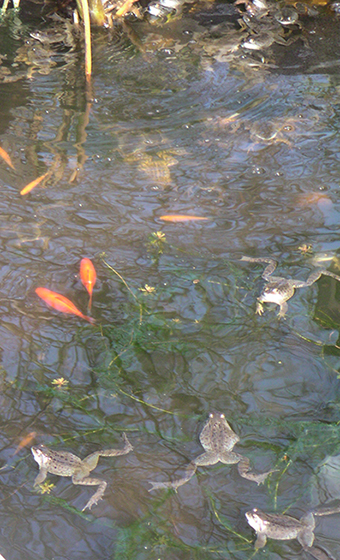
A pond creates a balanced habitat for wildlife in the garden.
Combination plants for pest control
The following plants will protect against the aphids and other bugs that can attack the mentioned vegetables.
- BASIL: tomatoes
- CHIVES: sunflowers and tomatoes
- LEEKS: carrots
- MARIGOLDS: tomatoes
- MINT: broccoli, Brussel sprouts, cabbage, carrots, cauliflower, kale and tomatoes
- NASTURTIUMS: beans, broccoli, Brussel sprouts, cabbage, cauliflower, kale and peas
- PEPPERMINT: cabbage, cucumber, melons, peas, potatoes, pumpkin, squash and tomatoes.
- SPRING ONIONS: carrots
Ants, aphids, black fly, greenfly, spider mites and white fly
Aphids can attack a wide variety of plants depending on their species. Many will thrive upon beans, cabbage, cucumber, melons, peas, potatoes, pumpkin, squash and tomatoes. Green aphids thrive on roses, grey ones on brassicas, black ones on broad beans and white ones on box hedges.
Ants protect aphids as they feed on the honeydew aphids produce so must also be removed. Control ants by trimming the lower parts of the plant so that they do not touch the ground and give ants easy access.
The use of an organic aphid control pesticide, such as neem oil, will take care of the ants as well.
Vinegar can help to remove the trails ants leave to use as a pathway to their feeding places. Dilute a tablespoon of vinegar with water in a sprayer and spray on to the pathways they use near to vegetables.
Sulphur is also a safe way to eradicate ants. Pour a trail of flower of sulphur powder around the ants’ nest.
Spider mites thrive upon asparagus, beans, melons, squash and other cucurbits, peas, tomatoes and strawberries, as well as several weed species. The same methods can be used to remove them as with aphids.
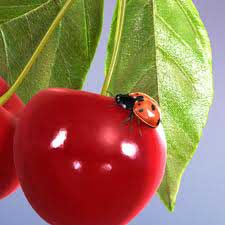
Encourage natural predators
Attracting the following beneficial insects to the garden is a natural way to kill aphids and spider mites. One ladybird will consume 5000 aphids during its year long lifetime.
- ASSASSIN BUG (Reduviidae)
- BIG EYED BUGS (Geocoris)
- DAMSEL BUG (Nabidae)
- DAMSELFLY (Zygoptera)
- DRAGONFLY (Anisoptera)
- ENCARSIA WASPS (Encyrtidae)
- GALL MIDGE (Aphidoletes aphidimyza)
- HOVERFLY (Syrphidae)
- LACEWING (Chrysopidae)
- LADYBIRD (Hippodamia convergens, Coccinellidae, ladybugs)
- MINUTE PIRATE BUG (Anthocoridae)
- PARASITIC WASPS (Trichogrammatidae)
- PRAYING MANTIS (Mantodea)
- SOLDIER BEETLE (Cantharidae, leatherwing)
- STINK BUGS (Pentatomidae)
Nearby plantings of the following will help to attract these beneficial insects to your garden, if left to flower, as many insect predators also consume pollen.
- CARAWAY
- CARROTS
- CELERY
- CORIANDER
- COW PARSLEY
- DANDELION
- DILL
- FENNEL
- GOLDEN MARGUERITE
- LOVAGE
- MINT
- PARSNIPS
- PARSLEY
- YARROW
Planting of the following plants that are attractive to aphids are good for organic aphid control. Growing these in a separate space from fruit and vegetables will lure aphids away.
- ASTER
- BEGONIAS
- CHRYSANTHEMUMS
- COSMOS
- DAHLIAS
- GERANIUMS
- HOLLYHOCKS
- LARKSPUR
- ROSES
- VERBENA
- ZINNIA
Chives, garlic and onions will also help to deter aphids as they do not like the odour.
Cucumber: Place a few slices in a small aluminium pie tin around the garden to remain free of pests all season long. The chemicals in the cucumber react with the aluminium to give off a scent undetectable to humans but which will make most garden pests flee the area.
Stinging nettles can be used as an aphid killer. Soak half a pound of nettles in a bucket of water for a week, before straining and using undiluted to control aphids.
Adding a very small amount of washing up liquid to a sprayer filled with water can be used to wash off aphids and other pests that attack some vegetables without contaminating the vegetables and fruits but should only be used very sparingly for vast outbreaks because it will also kill the beneficial insects.
A few aphids will not cause too much damage and are part of the balance of a healthy vegetable garden. Rubbing them off with the fingers or plain water in a powerful sprayer is often enough to keep them at bay.
How to avoid the carrot fly
Carrots can be grown in a container that is more than 60 cm (two feet) deep such as a plastic refuse bin as carrot flies cannot fly higher than 60 cm above the ground. Cut some holes in the bottom of the bin then add a layer of stones or broken pots for drainage.
Then add sieved stone free soil and top with a good potting compost before sowing your organic carrot seeds. Grow some spring onions around the edges to provide even more protection.
Slugs and snails
When disposing of snails it is pointless to simply throw them into your neighbours garden as they have a homing instinct and will return the next night. Never use salt to kill slugs and snails as this causes them immense pain for some time before they die.
Coffee grounds: These can be sprinkled around plants as a safe deterrent but do not use too often.
Copper: Slugs and snails get electric shocks from copper, so it is a useful tool to stop them getting near to your vegetables. It will not harm them but will deter them. Self-adhesive copper bands can be used around pots and planters.
Diatomaceous earth and sharp sand: Diatomaceous earth comes in the form of a chalky powder, and is the natural fossilised remains of diatoms, a type of hard-shelled algae. Both this powder and sharp sand make a good barrier to slugs and snails as they cannot easily cross it if it is sprinkled around vegetables or planters and raised beds. Diatomaceous earth will stop ants from farming aphids if placed around their nests.
Electric fence: Small electric ribbons which run off a nine-volt battery can be purchased and set up around vegetables. When a slug or snail comes in contact with the fence, it receives a mild static sensation that is undetectable to animals and humans. This does not kill the slug but causes it to look elsewhere for forage.
Grapefruit and flowerpot traps: Place half a grapefruit skin or a flowerpot upturned near to your vegetables with a small stone to raise one side. This will attract slugs and snails which can then be transported elsewhere the next morning. The grapefruit scent attracts them so is often a better solution. A wide plank can be used in the same way as slugs and snails will use it for shelter during the day.
NOTE: A snails homing instinct will allow them to return if less than 20 metres (65 feet) away.
Lava rock can be used as a barrier around plantings, but should be left mostly above soil level, otherwise dirt or vegetation soon forms a bridge for slugs to cross.
Seaweed has the added benefit of adding nutrients to the soil if used as a mulch around vegetables. Pile it on 3″ to 4″ thick – when it dries it will shrink to just an inch or so deep. Seaweed is salty and slugs and snails avoid salt. Push the seaweed away from plant stems so it’s not in direct contact. During hot weather, seaweed will dry and become very rough which also deters the slugs.
Watering schedule: If watering is only done in the early morning the soil dries out by the time snails and slugs become active at night. This can reduce slug and snail attacks by 80%.
Wood ash: Providing the plants concerned do not prefer an acidic soil, wood ash can be used around plants to deter slugs and snails. However, once it rains this deterrent is rendered useless and needs to be reapplied.
For details of how to grow your own nutritious sprouts from grains, legumes, nuts and seeds in a glass jar on a windowsill using just daily rinses of water see>> Sprouting greens
Related subjects
- A-Z of natural foods and remedies
- Air-purifying houseplants
- Anti-microbial healing plants and foods
- Brine pickling for health
- Nature cures for pets

Join our mailing list to receive your monthly emailed newsletter with all the latest scientific findings for natural health remedies.