
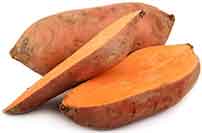
Also known as (Ipomoea batatas)
The earliest cultivation records of the sweet potato date to 750 BC in Peru, although archaeological evidence shows cultivation of the sweet potato may have begun around 2500-1850 BC. It was after 1740 that the term ‘sweet potato’ began to be used by American colonists to distinguish it from the white potato.
When Spanish explorers first arrived in the New World they were searching for an ocean route to India and its legendary treasures of gems, gold, silk, silver and spices. It was in the New World, now known as the Americas, that they discovered the nutritious food crops being grown by the native inhabitants that were very easy to produce and store. Three of them were corn, the white potato and the sweet potato.
Being a tropical plant, the sweet potato was found before the Irish potato by Columbus in the West Indies, Balboa in Central America and Pizarro in Peru. Like corn, it was not found growing wild but had been cultivated by the Incan and pre-Incan tribes in Sao Paulo and Brazil for thousands of years. They had developed many varieties, as is shown by their ancient pottery.
In most places in Latin America, the sweet potato is called ‘camote’, but the Incans called it ‘batata’ which is the origin of the word ‘potato’. Sweet potatoes have been one of the staple foods for the native tribes of the Americas for many centuries and they also make a permanent red dye from the mixed juices of limes and sweet potatoes.
The sweet potato was carried back to Spain and then to Italy, from where it spread to Austria, Germany, Belgium and England before the first white potatoes arrived. The Irish accepted white potato readily, but it took 200 years for the English to accept them being fit for human consumption. In contrast the sweet potato immediately became a treasured and expensive delicacy, and the white potato became known as the Irish potato.
Its alleged aphrodisiac properties could be the reason for its popularity in the upper classes of 16th century England and King Henry VIII was said to consume huge amounts of sweet potatoes, especially spicy sweet potato pie. Now it is widely grown in Asia and southern Russia, the Pacific islands, tropical America and in the United States as far north as New Jersey.
Outside of the tropics, sweet potatoes only thrive in warmer temperate climates and loose sandy soil that is well drained and only produce seed in the tropical climates. In northern climates, new plants are obtained by planting roots, or cuttings of the vines, in beds. The sprouts that form are then replanted in a field, one sprout to a ‘hill’ of soil. Once they are established, they require very little watering and, unless attacked by the numerous diseases and insect pests to which they are subject, develop many potatoes in each hill. Sweet potatoes produce more pounds of food per acre than any other cultivated plant, including corn and the white potato.
Sweet potatoes are related to morning glory and other vines but not yams as often thought and, unlike white potatoes, the leaves are also edible and nutritious whereas white potato leaves, and white potatoes that have turned green, contain solanine which is poisonous. Solanine is a steroid glycoside of the saponin group found in plants from the nightshade family which, in large doses, can cause gastrointestinal disorders such as diarrhoea and vomiting, hallucinations, paralysis and death.
Because white potatoes are members of the nightshade family, which some people have intolerances to, sweet potatoes are a good substitute. Although some people call sweet potatoes yams, the true yams originated in China and are a different plant related to the lily.
Health benefits of sweet potatoes
Anaemia: Because they contain iron and help with the production of red and white blood cells, they can prevent and treat anaemia.
Cancer: A protein isolated from sweet potatoes has recently been shown to slow the growth of colon cancer cells by 65%. It also inhibited lung and oral cancers by 50%. Other lab research has shown that sweet potato also potently inhibits leukaemia, lymphoma and liver cancer cells. And in studies on humans, eating this vegetable, either alone or with other foods, has been associated with reducing the risk of kidney cancer by 56%, gallbladder cancer by 67% and breast cancer by 30%, when consumed three times a week). They are rich in flavonoids which help to protect against all these cancers.
Diabetes: Sweet potatoes contain natural sugar which controls and stabilises the sugar levels in the blood. Not only do they have a low glycaemic index, but they have been shown in a clinical trial to help reduce blood sugar levels and improve insulin sensitivity in adults with type II diabetes. This may be due to their chromium content. The vitamin A in sweet potatoes can help to prevent retinal disorders that are common in people with diabetes.
Digestion and colon cancer: They contain high amounts of dietary fibre and thus prevent constipation and even colon cancer.
Emphysema: Most smokers have a lack of vitamin A and have problems with emphysema (air sacs damage). Sweet potatoes rejuvenate the respiratory system and prevent emphysema because of the high amounts of carotenoids that they contain. 100 g tuber provides 19218 µg of vitamin A and 8509 µg (micrograms) of beta-carotene.
Eyes and bones: Regular consumption of sweet potatoes can improve the health of the eyes due to the rich content of vitamin A and beta carotene. It can also maintain the health of the bones
Foetal development: They are extremely beneficial to consume during pregnancy because they have high levels of folic acid which is necessary for foetal tissue health maintenance.
Hair disorders: The beta-carotene in the sweet potatoes prevents hair damage and improves hair growth.
Heart attacks and strokes: They can control and maintain normal blood pressure and balance the electrolytes due to their content of potassium. The high amount of vitamin B6 helps the function of the heart and prevents heart attacks, strokes and digestive issues.
Immune System: The vitamin D and vitamin A in sweet potatoes can help to support the immune system and is very important for maintaining the health of the thyroid gland, bones, teeth, skin and heart.
Obesity: One study has shown that sweet potatoes reduce appetite and food intake.
Premenstrual tension: The magnesium and iron contained in the sweet potatoes help to treat menstrual symptoms both before and during menstruation.
Stress: They contain high amounts of magnesium that helps the whole-body system and functions as anti-stress agent.
Muscles and nerves: Components in sweet potatoes can help to normalise the heartbeat and the nerve signals that are sent to the brain. The germanium and selenium also help to build muscles and prevent muscle cramps and minimise swelling.
Skin and mucous membranes: Vitamin A is required by the body to maintain integrity of healthy mucus membranes and skin and the anthocyanin in purple skinned potatoes can remove wrinkles, dark circles around eyes and help to reduce puffy and swollen eyes. After boiling the potatoes with their skins on keep the water and use it to clean the face for blemish free healthy skin.
Significant nutrients in sweet potatoes
Sweet potato provides 90 calories per 100 g whereas white potatoes contain 70 calories per 100 g. They also contain no saturated fats or cholesterol and are a good source of dietary fibre.
Sweet potatoes contain more fibre, iron, vitamins C, B9 and K and potassium but less sodium than the white potato.
- Beta-carotene
- Betaine
- Calcium
- Choline
- Chromium
- Copper
- Germanium
- Iron
- Magnesium
- Manganese
- Molybdenum
- Nickel
- Phosphorous
- Potassium
- Selenium
- Silica
- Sodium
- Vitamin A
- Vitamin B1
- Vitamin B2
- Vitamin B3
- Vitamin B5
- Vitamin B6
- Vitamin C
- Vitamin D
- Vitamin E
- Vitamin K
- Zinc
The antioxidants beta-carotene, manganese, selenium and vitamins A, C and E can improve the condition of the skin and help to treat arthritis, asthma and gout.
Sweet potatoes are extremely rich in minerals such as calcium, chromium, copper, germanium, iron, magnesium, manganese, molybdenum, nickel, phosphorous, potassium, selenium, silicon and zinc which regulate and maintain the overall health of the body.
NOTE: Sweet potatoes are also rich in omega-6 fatty acids which are inflammatory and low in omega-3 fatty acids which are anti-inflammatory, therefore the best way to consume them would be with a high omega-3 food such as oily fish to balance the ratio of these important fatty acids. See>> Fatty acids
Related subjects
- A-Z of natural foods and remedies
- Anaemia
- Asthma
- Bone and joint disorders
- Cancer
- Diabetes
- Epilepsy
- Eye disorders
- Gout
- Hair and nail disorders
- Heart disorders
- Menstrual disorders
- Obesity
- Pregnancy and childbirth
- Respiratory system disorders (asthma and emphysema)
- Skin disorders
- Strokes
- Teeth and gum disorders

Join our mailing list to receive your monthly emailed newsletter with all the latest scientific findings for natural health remedies.