
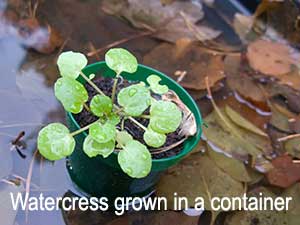
Also known as Nasturtium officinale and rorippa
Hippocrates knew about the powerful properties of watercress and even built his hospital next to a river where watercress grew wild so he could give it to his patients.
Watercress detoxifies the blood, stimulates the system, aids with digestion and also helps to clear catarrh in chest infections.
The apigenin flavonoid in watercress target the mitochondrial pathway of apoptosis which causes the body to eliminate abnormal cancerous cells that are mistakenly produced throughout life.
The inorganic mineral compounds in watercress of iridium and rhodium protect against cancer.
The compound, phenylethyl isothiocyanate, which gives watercress its peppery taste, is also able to interfere with the function of a protein that plays a critical role in cancer development.
Significant nutrients in watercress
- Apigenin
- Beta carotene
- Calcium
- Choline
- Ferulic acid
- Gallic acid
- Iodine
- Iron
- Lutein and zeaxanthin
- Magnesium
- Phosphorous
- Potassium
- Quercetin
- Vitamin A
- Vitamin B1
- Vitamin B6
- Vitamin B9
- Vitamin C
- Vitamin K
- Vitamin E
- Zinc
Health disorders watercress can help to prevent and treat
- Anaemia
- Bone and joint disorders (arthritis)
- Cancer
- Eye disorders
- Gout
- Intestinal disorders
- Psoriasis
- Respiratory disorders
- Rheumatism
- Skin disorders
- Urinary disorders (bladder and kidney stones)
Externally, watercress can be helpful for boils, cold sores, haemorrhoids, rashes ulcers and wound healing.