

In the late ‘80s, NASA scientists studied houseplants as a way of purifying the air in space facilities because the equipment used on the station, and even the astronauts themselves, produce gases and chemicals that can become concentrated and toxic over time.
They were ‘over the moon’ to discover that several plants filter out common volatile chemical compounds and these plants can also help clean the indoor air down here on Earth, which is typically far more polluted than outdoor air.
Ozone, the main component of air pollution, or smog, is most often associated with outdoor air but it also infiltrates indoor environments like homes and offices and with people in industrialised countries spending as much of 80 percent to 90 percent of their time indoors, eliminating ozone is a health priority. Ozone can be released by ordinary copy machines, laser printers, ultraviolet lights, and some electrostatic air purification systems, all of which contribute to increased indoor ozone levels.
At the top of the extensive list of toxic effects of ozone on humans are asthma, pulmonary oedema, haemorrhage, inflammation and reduction of lung function.
Growing plants in the home can be very beneficial to the health not only because they can remove airborne contaminants from the home environment, but some are also nutritious herbs for both medicinal and catering use. Many also have volatile oils which can be used to clean both the home and the body.
Houseplants can reduce and even prevent ‘sick building syndrome’ which can cause allergies, eye, ear and nasal irritations, dizziness, headaches and nausea. They can also reduce the risk of contracting colds and other viruses, decrease blood pressure, lift the mood, reduce mental fatigue and improve sleep.
However, flowers and plants (except the snake plant (Mother-in-Laws Tongue) stop photosynthesis after dark and release carbon dioxide instead but only at a minimal level. When plants photosynthesise, during the day, most of them consume 6 molecules of carbon dioxide and emit 6 molecules of oxygen and one of glucose. When they respire, at night, this is reversed but since plants respire at a slower rate than they photosynthesise, there is a net gain of 2-3 molecules of oxygen per cycle. It is therefore perfectly safe to have a few plants in the bedroom at night.
NASA research suggests having at least one plant per nine square metres (approximately100 square feet) of home or office space.
Household pollutants
Solvents in glues, paints and varnishes commonly used in the production of carpets, drywall and pressed wood furniture, such as toluene and formaldehyde are polluting people’s homes. Over forty volatile organic compounds have been identified that come from modem appliances such as computers, monitors and televisions.
The insidious effects of indoor air pollution have been associated with a 74% increase in asthma between 1980 and 1994 and children under the age of five in the United States have experienced an increase of 160%. Studies suggest this increase is at least partially attributable to reduced ventilation and increased energy efficiency in modem buildings.
There has been a fivefold increase in Taiwan over 20 years; and a 30-fold increase in asthma patients in medical facilities in Japan over 30 years. Fifteen percent of the population of Australia, New Zealand and the Pacific Islands suffer from asthma as well. Indoor air pollution has also been linked to increased prevalence of Parkinson’s disease, brain tumours, multiple chemical sensitivity, skin disorders and other nervous system disorders.
The chemicals below can build-up in the system and produced many health issues after prolonged exposure especially for those that are unwell, elderly or very young whose body cannot easily eliminate toxins from the system. Those leading a sedentary lifestyle are also at risk as physical activity helps the body to decontaminate itself. Reducing the use of toxic household cleaners and personal care products can also help the home environment. See>> Hygiene, toxins and health
A-Z of household pollutants
Ammonia: Found in refrigerators, cleaning products, dyes, fertilisers and textiles. Ammonia can cause asthma, lung damage, rapid weak pulse and restlessness.
WARNING: Never mix ammonia with bleach. This causes the release of toxic chlorine gas, which can be deadly.
Benzene, Dichlorobenzene and Ethylbenzene: Found in carpets, detergent, dyes, explosives, furniture, glue, ink, paint, petrol, pharmaceuticals, plastics, rubber and varnishes. Benzene is an irritant to the eyes and sinuses and is also known to cause chromosomal aberrations and leukaemia in humans.
Chronic exposure to even low levels causes drowsiness, headaches, loss of appetite, nervousness, psychological disturbances and diseases of the blood such as anaemia and bone marrow disease. Acute inhalation of high levels of benzene can cause blurred vision, dizziness, euphoria, headache, irregular heartbeat, liver and kidney damage, nausea, paralysis, respiratory disorders, tremors, weakness and unconsciousness. Repeated skin contact with benzene causes blistering, dermatitis, dryness and inflammation.
Butane: Used as lighter fluid and in butane torches. It is also sold in small bottles for cooking and may be blended with propane. It is also used as an aerosol propellant. Butane is a euphoric, so it is often abused as an inhalant. Unfortunately, it causes asphyxia, cardiac arrhythmia, and spasms in the muscles of the airways in the lungs. This last property is the cause of “sudden sniffer’s death,” and is the cause of death in 55% of the cases related to inhaling solvents.
Decane: Found in cove-based wall coverings, glue, paraffin, petrol and rubber flooring. Decane can cause defatting of the skin and dermatitis, corneal damage, dizziness and lung damage,
Ethylene: Used as a plant hormone for ripening fruits. It is also used to produce polyethylene (a polymer of ethylene and the world’s most widely used plastic) as well as ethylene glycol, which is the primary component of antifreeze. Ethylene has been used as an anaesthetic in the past, but is highly dangerous being an asphyxiate, combustible and a class 3 carcinogen
Formaldehyde: Commonly found in a variety of cleaning products, personal care products and even face tissues and toilet paper. Also found in grocery bags, fabrics, foam insulation, furniture, paper, plywood, soft furnishings, tobacco smoke, waxed paper and emissions from natural gas and kerosene cookers.
It is also used in adhesive binders in floor coverings, carpet backing, fabric stiffeners and wrinkle resistant materials, fire retardants, permanent pressed clothes and water repellents. It irritates the mucous membranes of the eyes, nose and throat and can cause asthma. It has also been linked with throat cancer in individuals that reside in mobile homes.
Nonane: Found in kerosene, paraffin wax candles and crayons, paint, petrol, printer ink, shoe soles, solvents, tobacco smoke and varnishes. Nonane can cause asthma, confusion, depression, dizziness, euphoria, headache, inability to concentrate, liver and lung damage and taste dysfunction.
Styrene: Found in bathtubs, boats, building insulation, cars, disposable cups, floor waxes and polishes, plastic packaging, personal care products, rubber products such as shoes, tyres and conveyer belts. It is also approved for use in containers and food-contact materials and is a synthetic flavouring in ice cream and confectionary.
In May 2013, the Washington D.C. District Court dismissed the styrene industry’s challenge to the identification of styrene as “reasonably anticipated to be a human carcinogen”. The U.S. Environmental Protection Agency regulates styrene as a Hazardous Air Pollutant and has described styrene to be “a suspected toxin to the gastrointestinal tract, kidney and respiratory system among others”.
Toluene: Found in acrylic paints, adhesives, airplane glue, lacquers, paint thinners, petrol, rubber cement, shoe polish, varnishes and waxes. Toluene is highly lipophilic, so it readily crosses the blood-brain barrier, which accounts for its primary effects on the central nervous system. It markedly reduces metabolic function in the brain, especially the hippocampus, pons and thalamus.
It also causes asthma, ataxia, blindness, cardiac arrhythmia, confusion, decreased cognitive ability, delusions, dizziness, euphoria, hallucinations, headache, hearing loss, hypokalaemia, liver and kidney damage, lung damage, muscle weakness, nausea, optic and peripheral neuropathies, seizures, stupor, tinnitus, vertigo, vomiting, weak and brittle bones and coma.
Trichloroethylene: Found in clothes that have been dry-cleaned, glue, lacquers, paint, printing inks, varnishes and in the metal degreasing industry. It has been linked with cancer of the liver.
Xylene: Found in glue, lacquers, nail polish, plastic, petrol, rubber cement, solvents and varnishes. It causes a depression of the central nervous system leading to dizziness, headache, nausea and vomiting. It can also cause kidney and liver damage, loss of coordination, respiratory failure and even death.
A-Z of 28 houseplants studied by NASA
All the plants listed below will clear carbon dioxide and these and many others may clear more volatile organic compounds than noted as only a few have been studied for their toxin removing abilities and only in sealed and ventilation-controlled atmospheres. Many others most probably have this capability. as scientists are discovering. and the more plants the more toxins will be removed especially in low ventilated areas which many homes have become due to energy efficiency measures.
All plants absorb some of the particulates from the air at the same time that they take in carbon dioxide, which is then processed into oxygen through photosynthesis and released without the toxins. Besides the plant remove pollutants, the microorganisms associated with the plants are present in the potting soil and are also responsible for much of the cleaning effect.
They can ingest pathogenic bacteria, viruses and pollutants and turn them into food for the plant. Plants should be grown in soil which has activated carbon pellets added for more powerful results. These pellets should last about 12 to 18 months before new ones need to be added.
Studies have shown that houseplants are able to remove up to 87% of air toxins in 24 hours and can also reduce house dust levels by 20%. Enzymes in the plant leaves break down the toxic chemical into non-toxic components that can be used by the plant. Research also shows that chemicals are also transported into the root system and the soil, where soil micro-organisms can break down the substances even further.
Aloe vera
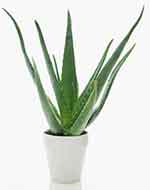
Botanical name: Aloe barbadensis
Toxins cleared: Formaldehyde and benzene.
Buy the Aloe Vera plant from Amazon
Aloe Vera is a succulent that loves the sun and needs very little care, only a small amount of water. The aloe must not stand in water and is easy to grow on a sunny windowsill. Aloe leaves contain a liquid gel which is full of vitamins, enzymes, amino acids, and other compounds that have wound-healing, antibacterial, and anti-inflammatory properties and they can treat skin conditions such as sunburn and psoriasis. For more health benefits and medicinal uses see>> Aloe vera
Buy the Aloe Vera plant from Amazon
Areca palm

Botanical name: Chrysalidocarpus lutescens
Toxins cleared: Benzene, formaldehyde and trichloroethylene amongst many others
Buy the Areca Palm plant from Amazon
The Areca palm is native to Madagascar and can reach a height of 6-8 feet inside but outdoors it may grow as tall as 25 feet. Its nickname, ‘the butterfly palm’, comes from its long feathery fronds (leaves) arching upwards from multiple reed like stems. The Areca palms require bright indirect light. Too much light or direct sun burns the fronds and causes them to turn yellow.
Allow the top 2.5 to 5 cm (one to two inches) of soil to dry out before watering and never allow it to sit in water as this causes root rot. The fronds of an Areca wilt when they need water but quickly perk up once the soil is soaked. Like all palms, Arecas do not like chemicals or salt so avoid water that has passed through a softener or contains fluoride or chlorine as this causes freckle-like spots on the leaves.
Feed an Areca palm monthly when it is actively growing with a balanced liquid fertilizer at half the recommended strength and, as it requires high humidity, spray lightly with water often. It thrives well in temperatures between 18 to 24°C (65 to 75°F) during the day and around 12°C (55°F) at night. It can be placed outside during the summer but must be brought in at night if temperatures go below 10°C (50°F).
Buy the Areca Palm plant from Amazon
Azalea
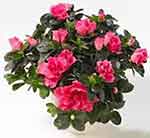
Botanical name: Rhododendron simsii
Clears formaldehyde.
Buy the Azalea indoor plant from Amazon
Azaleas are related to rhododendrons and blueberries and part of an ancient group of plants dating back millions of years. They are also the national flower of Nepal. Azaleas thrive in temperatures between 15 and 18°C (60 and 65°F). They need to be watered regularly and, as they also absorb water through their foliage, it is a good idea to mist the leaves with water regularly from a spray bottle too.
NOTE: The azalea plant contains grayanotoxins which, if eaten, can lead to vomiting, seizures and cardiac arrest in all animal species. These plants are considered very poisonous and should be kept away from pets and children.
Buy the Azalea indoor plant from Amazon
Bamboo palm
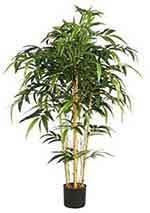
Botanical name: Chamaedorea sefritzii
Toxins cleared: Benzene, formaldehyde and trichloroethylene.
Buy the Bamboo Palm plant from Amazon
The Bamboo palm is native to Mexico and Central America and thrives in low light areas. Indoors, the bamboo or reed palm, can reach a height of 120 cm to 365 cm (4 to 12ft) and a width of 90 to 152 cm (3 to 5ft) with multiple reed-like stems growing in clumps.
The bamboo palm thrives in full sun or bright light and shady areas and filters lots of air if allowed to reach its full height, making it a healthy and pet-friendly indoor addition.
Buy the Bamboo Palm plant from Amazon
Banana fig
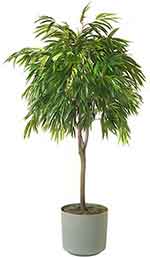
Botanical name: Ficus maeleilandii alii
Toxins cleared: A variety of toxins including formaldehyde.
Buy the Banana fig plant from Amazon
The banana fig is happy in full sun or partial shade and thrives in a temperature range of 13 to 24°C (55 to75°F), although exposure to lower temperatures above 7°C (45°F) is tolerated for short periods of time. Provide filtered sunlight or bright indirect light but avoid direct sunlight from hot windows, which may scorch the plant. If it is situated against a wall, it is best to rotate the plant every few days to prevent the back of the plant from losing its leaves.
Allow the top centimetre (0.4 inch) of potting mixture to dry out between watering. Use tepid water, as cold water may cause leaf loss. Do not allow the plant to stand in water and never allow the potting mixture to dry out. During the active growth period (spring and summer), feed once every two weeks with standard liquid fertiliser. Decrease fertiliser gradually in autumn and refrain from feeding completely during the winter. Mist often as banana fig prefers high humidity.
NOTE: Hand protection should be used whilst dealing with this house plant for those who have allergic reactions to latex.
Buy the Banana fig plant from Amazon
Banana plant

Botanical name: Muso acuminata
Toxins cleared: Formaldehyde
Buy the Banana indoor plant from Amazon
The banana plant needs rich, humus-like and well-draining soil as well as plenty of filtered sunlight through windows to prevent leaf scorching. They need humid conditions and very warm temperatures to thrive; night temperatures around 19°C (67°F) are ideal and day temperatures of 26°C (80°F). Water sparingly during the rest period in autumn and winter and give plenty of water and feed fortnightly during the spring and summer growth period.
Boston fern
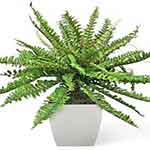
Botanical name: Nephrolepis exaltata Bostoniensis
Toxins cleared: Arsenic, formaldehyde and mercury.
Buy the Boston Fern plant from Amazon
These plants prefer to clean the air from a cool location with high humidity and indirect light. They are relatively easy to grow, but they do need to stay moist. Check soil daily, to see if it needs water, and give it a good soak once per month. If fern leaf tips are turning brown because of low humidity, try standing the plant on a wet pebble tray. Be sure it is sitting on the pebbles and not in the water.
The Boston fern does very well in hanging baskets but, as it needs plenty of humidity, would suit a bathroom best. Boston ferns prefer cool temperatures between 15 to 21°C (60 to70°F). Keep all types of ferns away from heat sources such as fireplaces.
Chinese evergreen
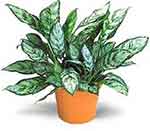
Botanical name: Aglaonema Crispum ‘Deborah’
Toxins cleared: Many air pollutants and toxins.
Buy the Chinese Evergreen plant from Amazon
The Chinese evergreen is very easy to care for and only needs low light. It emits more oxygen than most other plants and is listed by NASA as one of the top ten toxin removing plants. During the active growth period water moderately making the potting mixture moist but allowing the top 2-3 cm (0.78-1 inch) of the mixture to dry between watering.
During the rest period (which may be very short or even non-existent) water only enough to keep the potting moisture from drying out completely. High humidity is required by the Chinese evergreen, so standing the plant on a tray of wet pebbles and misting the leaves regularly can help it thrive. Use liquid feed monthly except during the rest period.
NOTE: This plant is poisonous and should not be kept within reach of young children and pets.
Chrysanthemum
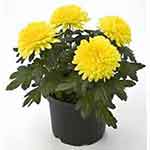
Botanical name: Chrysantheium morifolium
Toxins cleared: Ammonia, benzene, formaldehyde and xylene.
Buy the Chrysanthemum plant from Amazon
Chrysanthemums were brought to Japan by Buddhist monks in 400 AD and have remained a very important part of Japanese culture to this day. The flowers last three to four weeks indoors with very little care and in almost any environment before needing to be replaced. The chrysanthemum is rated, by NASA, as one of the best pollutant removers of them all. It prefers direct sunlight which will help the plant open its buds. Dead head to gain more flowers.
NOTE: All parts of this popular flowering plant are potentially toxic to dogs, cats, horses and other mammals. Ingesting the plant can cause vomiting, diarrhoea, excessive salivating, rashes and a lack of coordination.
Corn cane
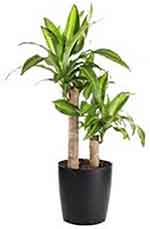
Botanical name: Dracaena massangeana
Toxins cleared: Formaldehyde.
Buy the Corn Cane plant from Amazon
The corn cane is a member of the ginger family and is also known as the ornamental ginger, marble ginger, striped narrow leaf ginger, Sander’s ginger and variegate ginger. This plant is native to a region in the Bismarck Archipelago in the Solomon Islands. The corn cane only needs low water and low light, so it does very well in many areas of the home. However, it does need high humidity so standing it on a tray of wet pebbles and misting the leaves regularly can help it thrive.
It prefers medium light or filtered sunlight. If it is kept in too dark a position variegation of the leaves will be reduced and prolonged direct sunlight can cause foliage to scald, brown or bleach. During the warm season the corn cane can be moved outdoor to a position with partial shade but must be brought back inside before the temperature drops below 15°C (59°F).
As soon as the rhizomes start growth in early spring begin to water plentifully, as much as necessary to keep the potting mixture thoroughly moist. After the active growth period gradually reduce the quantity and water only moderately during the rest period. Apply a liquid feed every two weeks from spring to summer. Remove leaves when they are dying off and cut old canes to their base.
NOTE: All members of the Dracaena family are toxic to dogs and cats.
Buy the Corn Cane plant from Amazon
Devil’s ivy or Golden pothos
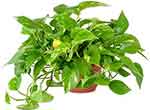
Botanical name: Scindapsus aures
Toxins cleared: Formaldehyde and other volatile compounds.
Buy the Devil’s Ivy plant from Amazon
The Devil’s ivy plant’s native range extends from Northern Australia through Malaysia and Indochina into China, Japan and India. Devil’s ivy grows very fast and can flourish in dark areas of the home. Water it regularly but less so in cold weather. Leaf drop is a good indication of over watering; however, the leaves do need frequently misting as it requires high humidity.
In warm rooms it is advisable to stand pots on trays of wet pebbles and suspended saucers of water under hanging baskets. Apply liquid feed about once every two weeks during the active growth period in the spring and summer and wait six months before feeding new plants.
NOTE: Both the stem and the leaves of this common houseplant contain insoluble calcium oxalates. Chewing or biting into the plant releases the crystals which penetrate tissue, resulting in injury. These steroidal saponins and glycosides cause tissue irritation and possible swelling when chewed and lead to oral irritation, intense burning and irritation of the mouth, tongue and lips, excessive drooling and foaming at the mouth, difficulty breathing and swallowing, lack of appetite and vomiting.
Dragon tree
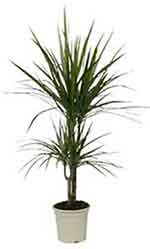
Botanical name: Dracaena marginata
Toxins cleared: Benzene, formaldehyde, trichloroethylene and xylene.
Buy the Dragon Tree from Amazon
Bright conditions with some shade is suitable for the dragon plant as direct sunlight will damage the leaves. It grows very tall and it is natural if the leaves start dying and coming away at the bottom of the plant, similar to how a yucca tree sheds its bottom leaves for new growth. They can be removed when they start deteriorating in looks. Allow dracaenas to dry slightly between watering. Wait until the soil surface is dry to the touch, then soak thoroughly with tepid (not cold) water.
NOTE: The dragon tree is toxic to animals such as cats and dogs if eaten.
Dwarf pygmy date palm
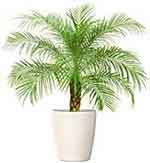
Botanical name: Phoenix roebelenii
Toxins cleared: Formaldehyde and xylene.
Buy 10 Dwarf Pygmy Date Palm seeds from Amazon
The date palm thrives in filtered light but can also withstand bright full sunlight. Water sparingly, making the potting compost barely moist during the rest period. When active growth begins in spring, increase amounts of water gradually and keep the potting compost thoroughly moist during the growing season but never allow pots to stand in water.
Only use warm water and as winter approaches, begin to reduce amounts gradually once more. Apply a liquid feed to established plants once every two weeks during the active growth period only. The dwarf pygmy palm grows well in normal room temperatures, but they thrive better if they are kept at about 10 to13°C (50-55°F) during their winter rest period.
NOTE: This palm has sharp needle-like spines arranged near the base of the leaf stem. These can easily penetrate skin and may result in painful infections. Due to this, always keep out of the reach of young children.
English Ivy

Botanical name: Hedera helix
Toxins cleared: Airborne faecal-matter particles such as methane, benzene and formaldehyde.
Buy the English Ivy plant from Amazon
A study found that in just 12 hours, English ivy can remove airborne faeces by 94% and mould by 78%, while also filtering out toxins like formaldehyde, benzene, and xylene. But be careful where you place it if you have pets, it may not be safe for all creatures.
The English ivy is an invasive plant species native to most of Europe and western Asia. It thrives in an environment of bright filtered to low light. Ample light helps the leaves become more colourful but filter the light to prevent excessive heat which can lead to drying, leaf loss and poor growth. This plant is not greatly affected by hot and cold temperature, but fluctuating temperatures can cause problems and always keep them away from drafts, open doors or vents.
In temperatures above 18°C (64°F) provide extra humidity by standing on a dish of wet pebbles and mist with warm water regularly. Water the plants freely during summer growth and keep them moist in the winter. Spraying with water weekly in the summer will help prevent spider mites from infesting the plants.
Feed once a month with liquid feed diluted to a quarter normal strength. The English ivy is said to be a great houseplant to help reduce occurrences of asthma and allergies.
NOTE: English ivy contains toxins such as alpha-hederin, caffeic acid, chlorogenic acid, didehydrofalcarinol, emetine, falcarinol, hederasaponin C, hederasaponin B, hederasaponoside B and C, polyacetylene terpenoids: and rutin. The cell sap of English ivy has shown the ability to create redness, itching and/or blisters when it comes in contact with living tissue of humans and other animals.
Symptoms of ingestion include an immediate burning sensation in the throat and mouth; possibly followed by redness, blisters, rash and obvious visible irritation of the oral mucosa; excessive drooling, obvious pain or discomfort of the mouth, pawing at the mouth, hoarse or weak sounding vocalisation; excessive desire to drink and gastrointestinal upset such as abdominal pain, diarrhoea and vomiting. In cases of an extremely large ingestion the symptoms can be loss of coordination, hypotension (abnormally low blood pressure), stupor, tachycardia, convulsions and coma.
Buy the English Ivy plant from Amazon
Gerber or Barberton daisy

Botanical name: Gerbera jamesonii
Toxins cleared: Formaldehyde and xylene and clears benzene and trichloroethylene more exceptionally than other plants.
Buy 50 Gerbera Jamesonii seeds from Amazon
The gerbera daisy thrives in full sun so is ideal for a bright windowsill, where it will get some direct sunlight but will need some afternoon shade in hot summer climates. Growing them on a patio is another option, as long as the temperature doesn’t rise above 24°C (75°F). They thrive in cool to average temperature 13 to24°C (55 to75°F). Bring them indoors, when the weather begins to cool in the autumn, and they will live for several years, even blooming in the winter.
They need moderate watering as rot will occur if the crowns are buried or the drainage is poor. The soil should always be moist but never wet and they must never stand in water. Always wait until the top 2-3cm (one inch) of soil is dry before watering again.
They require fortnightly feeding with a weak liquid feed, especially in summer, to promote flowering. Deadheading will encourage a longer blooming season and removing old leaves promptly helps prevent fungus from growing on the plant.
Heart leaf philodendron

Botanical name: Philodendron hederaceum is the correct name but it is sometimes called Philodendron cordatum, Philodendron cuspidatum, Philodendron micans, Philodendron oxycardium or Philodendron scandens.
Toxins cleared: Formaldehyde and many other air pollutants.
Buy the Sweetheart plant from Amazon
Also known as the ‘sweetheart plant’, the philodendron is a vine with aerial roots that is native to Central America and the Caribbean. Philodendron means “tree loving” and many of these species have two growth phases, a juvenile form and a mature form, which often look very different in leaf size and shape.
Container-grown plants usually stay in the juvenile phase. They are a very easy houseplant to grow as they can withstand many climates and grow very rapidly. They are attractive in hanging baskets and can be made to climb anywhere in the home or office and thrive in low light which is also useful. It is advisable to pinch out growing tips from time to time to provide a bushier effect as they can become spindly if left to grow naturally.
When watering, soak the entire surface to prevent leaf problems because of dry soil areas then leave until around 50% of the soil is dry before watering again. When the plant is producing new leaves provide liquid feed at 50% the normal dose every fortnight. Mist the plant to increase the humidity and it will then produce larger leaves. It is best to use purified water as the minerals in tap water can build-up on the leaves. This plant cannot tolerate temperatures which drop below 13ºC (55ºF).
The heart leaf philodendron It is capable of absorbing between 80 and 90% of the formaldehyde present in water-based paint, roofing felt or insulation material, glues in fitted carpets and laminated wood floors.
NOTE: This is not a good plant to have around small children or pets as it is toxic if eaten.
Buy the Sweetheart plant from Amazon
Holy basil
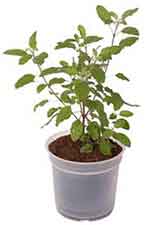
Botanical name: Ocimum tenuiflorum
Toxins cleared: Carbon dioxide and carbon monoxide.
Buy Holy Basil plants from Amazon
Holy basil is one of the few plants that emit oxygen 20 hours a day and also absorbs many types of harmful gases from the environment. It is a tropical plant that needs high humidity and dislikes direct sunlight. Holy basil requires plenty of moisture in the soil and needs watering at least three times daily in summers and at least once a day in winter. It only requires a liquid feed once a month at half strength during the summer.
Holy basil is a herb with powerful antibacterial and medicinal properties similar to, but more potent than, the common basil plant. The leaves are a nerve tonic and also sharpen memory and also promote the removal of the catarrhal matter and phlegm from the bronchial tube. They also strengthen the stomach and induce copious perspiration. In case of acute fevers, a decoction of the leaves boiled with powdered cardamom in half a litre of water and mixed with honey and milk brings down the temperature.
The seeds of the plant are mucilaginous which means they produce gel around the seed once they are exposed to water like chia and flaxseeds and this is good for digestive health for most people except those with an imbalance of intestinal flora or those with an autoimmune disorder.
The adaptogenic properties of holy basil can help alleviate stress-related damage, improves energy levels and endurance, supports healthy immune functions and promotes healthy gastric tissue which is often subjected to damage during times of stress. It also has many beneficial actions on the heart as a blood thinner and promotes good circulation. When taken daily, it can also lower high blood pressure by helping optimise cholesterol levels. To find out how to use this plant for many health disorders see>> Holy basil
Kimberly Queen fern
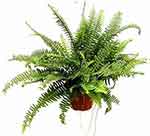
Botanical name: Nephrolepis obliterata
Toxins cleared: Clears formaldehyde, toluene and xylene.
The Kimberly queen fern, or Australian Sword Fern as it is also known, is more compact and easier to care for than most other ferns and makes an ideal hanging plant. It prefers light but not direct sunshine and always allow the top 5-7 cm (two to three inches) of soil to dry out before watering.
Crispy brown leaves in the centre of the plant are an indication of overwatering. Feed once a month in the spring and summer and every other month in autumn and winter with a diluted liquid plant food at half the recommended strength. It needs high humidity so stand on a tray or saucer filled with pebbles and water but not in the water.
Lady palm
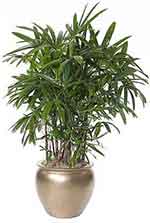
Botanical name: Rhapis Excelsa
Toxins cleared: General air purifier especially benzene, and formaldehyde, toluene, trichloroethylene and xylene.
The lady palm thrives well when slightly root-bound, so it should be kept it in a smallish pot. In a 25 cm (10 inch) or larger pot, a Lady palm can grow up to 4.27 cm (14 feet) tall. It prefers indirect light and evenly moist soil, but not soggy, during the growing season. Like many palms, it is sensitive to boron, chlorine and fluoride, and boron in the water so it is best to allow the water to stand for 24-48 hours before using it or use distilled water.
The foliage should be misted daily or stand on a tray or saucer of wet pebbles. Brown leaf tips are caused by irregular watering and dry air but may be snipped off with scissors. If allowed to get too dry it can get infected by red spider mite so it is best to also wipe the leaves with a damp cloth now and then.
Lily turf

Botanical name: Liriope spicata
Toxins cleared: Ammonia and formaldehyde.
Lily turf can grow in filtered sunlight, partial or full shade and is evergreen so makes an ideal house plant. It requires watering when the top 5 cm (two inches) of soil has dried out and feeding once a month from early summer to help produce more flowers in the summer and autumn but not during the winter. It thrives in humid conditions so is best kept in a bathroom or on a tray or dish of wet pebbles.
Mother-in-laws tongue or Snake plant
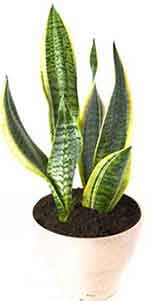
Botanical name: Sansevieria trifasciata Laurentii
Toxins cleared: 107 toxins including formaldehyde, nicotine, nitrogen oxides, toluene and xylene.
Buy the Snake plant from Amazon
The mother-in-law’s tongue is native to India, Indonesia and Africa and is one of the hardest and easiest houseplants to grow. It is also one of the plants that releases oxygen at night instead of carbon dioxide so is a useful plant for the bedroom.
It can thrive in low light conditions (60-80% shade) and is very drought tolerant and, although it does need to be watered occasionally, it generally prefers drier conditions and some sun. Let the soil dry between watering and, during winter, reduce watering to monthly or whenever the soil is dry to the touch. Water every other week during the growing season and only the soil as water on the leaves will cause them to rot. Never allow the pot to stand in water either.
NOTE: Mother-in-law’s tongue is toxic if eaten so is not recommended in children’s bedrooms or where pets can reach them.
Buy potting soil for your snake plant from Amazon
Moth orchid
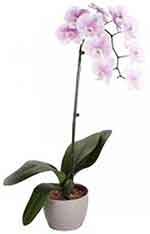
Botanical name: Phalaenopsis
Toxins cleared: Formaldehyde.
Buy the Moth Orchid from Amazon
The moth orchid is native to Australia, Indonesia and the surrounding islands and not only absorb carbon dioxide; but also releases oxygen at night, therefore a bedroom is a good place for these orchids. The moth orchid loves sunshine (but not midday sun) and lots of water, best done in the morning, once the top centimetre (0.4 inch) or so of the potting mixture has dried out.
Do not water in the middle of the leaves as this can led to them rotting and do not allow the plant to stand in water. Never let any beads of moisture stay on the leaves as this can cause rot and fungus infections and black spots will appear if the moisture remains on them throughout one single night. Use an orchid liquid fertiliser every two weeks or a foliar feed with every third or fourth watering.
A minimum temperature of 20°C (68°F) throughout the year is essential, along with high humidity therefore plants thrive best if stood on trays of moist pebbles or are lightly misted with water early in the morning. They will naturally shed leaves after some time and every two years move plants into slightly larger containers using a peat or bark-based mixture. They thrive especially well in wire or wooden baskets lined with sphagnum moss.
Buy potting soil for your Moth Orchid from Amazon
Buy plant food for your Moth Orchid from Amazon
Peace lily
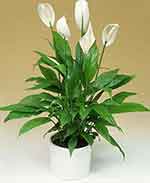
Botanical name: Spathiphyllum wallisii
Toxins cleared: Benzene, formaldehyde, toluene, trichloroethylene and xylene.
Buy the Peace Lily from Amazon
The peace lily is found growing wild in tropical rain forest regions of Central America, usually found in wet habitats with low light. Peace lily plants have major air-cleaning abilities and are easy to grow. They will flower for much of the summer; however, they do contribute some pollen and floral scents to the air so those with hay fever may wish to avoid them. Grow peace lilies in a shady spot as direct sunlight may burn the leaves, however, if light is too low, they may not produce many flowers.
Allow the top centimetre (0.4 inch) or so of the potting mixture to dry out before watering and if temperatures fall below 15°C (59°F) for more than a day or two, reduce the quantity of water, making the potting mixture barely moist but it is important to not allow the potting mixture dry out completely.
Apply a liquid feed every two weeks from early spring to late autumn when growth is most active but continue feeding throughout the year if the plant is actively growing in a peat-based mixture. When flowers start to fade, cut off the flower stalks as close to the base as possible. Repot into one size larger every spring until the size is as desired then, every five years, the plant will need dividing as it will become pot bound and suffer as a result.
NOTE: Ingestion of the peace lily can cause irritation of the tongue and lips, increased salivation, difficulty swallowing and vomiting in most mammals.
Rubber plant

Botanical Name: Ficus elastica, Ficus robusta, Peperomia obtusifolia
Toxins cleared: a wide variety of toxins including formaldehyde.
Buy the Rubber Plant from Amazon
The rubber plant is native to India and Malaysia and was once grown for the rubber that was produced from its sap hence the name. It does not like to be moved around and it needs rich soil, filtered light and does not need watering often. Allow the top of the soil to dry out and water sparingly during cooler months.
Both overwatering and under watering will turn the laves yellow and, in some species, overwatering will cause the leaves to fall off. Only add a diluted liquid feed sparingly once a month during the active growing season (spring and summer). Always place away from air-conditions, drafts, fires and heaters as it requires constant temperatures. If placed in a dark area it will produce weak stems and small leaves. This plant emits especially high levels of oxygen.
NOTE: All parts of the rubber plant are poisonous to pets if ingested.
Spider plant
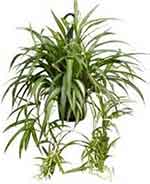
Botanical name: Chlorophytum comosum
Toxins cleared: Benzene, carbon monoxide, formaldehyde and xylene.
Buy the Spider Plant from Amazon
The spider plant is very hardy and easy to grow and prefers bright but indirect sunlight. Allow the top 50% of the soil to dry out before watering. The green of a spider plants leaves will begin to fade when it requires water and become green again once it is watered. Brown tips can be caused by using water that is high in salts and chemicals.
Only use a liquid feed sparingly once a month at half strength during the summer. Too much feed will also make the leaf tips turn brown. The spider plant will throw out flowering shoots which turn into baby spider plants which can be potted up to give away to friends and it is a good plant to keep in a hanging basket.
NOTE: The spider plant is nontoxic so therefore a good choice to have around children or pets.
Umbrella tree

Botanical name: Brassaia actinophylla
Toxins cleared: Benzene.
Buy the Umbrella tree from Amazon
The umbrella tree, also known as Amate, octopus tree, Queensland umbrella tree or Schefflera actinophylla, prefers plenty of water and humidity but only needs indirect sunshine to thrive and can survive in shady areas. It needs plenty of water during the summer, once or twice a week and mist the leaves occasionally.
During the winter water once a week and mist every two weeks. Never allow it to stand in water as this will cause the leaves to become yellow and wither. It will also thrive well if the leaves are cleaned regularly with a damp sponge. Feed once a month during the summer season with a diluted liquid feed. It may grow long spindly stems if the temperature is too warm and there is not enough light and it may need to be supported by canes when it reaches a certain height. Pinching out the top growing tips can make it become bushier.
NOTE: This common houseplant is toxic to cats and dogs. Chewing or biting into this plant releases the crystals which penetrate tissue resulting in injury. When dogs or cats ingest insoluble calcium oxalate-containing plants, clinical signs may be seen immediately and include pawing at face (secondary to oral pain), drooling, foaming and vomiting. Moderate to severe swelling of the lips, tongue, oral cavity and upper airway may also be seen, making it difficult to breathe or swallow.
Wax begonia

Botanical name: Begonia semperflorens
Toxins cleared: Benzene and toluene.
The wax begonia originated in Mexico and needs plenty of light but indirect sunshine and flowers during the summer. It does not tolerate temperatures below 10°C (50°F) and will suffer in dry air. Stand on moist pebbles to increase humidity but do not allow the pot to stand in water and avoid wetting the leaves.
Add a liquid feed every couple of weeks when the plant is actively growing. Over watering and poor air circulation can result in brown and black spots on the leaves. Always allow the top of the soil to dry out before watering again.
NOTE: All species of begonia are toxic to pets.
Weeping fig
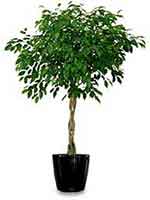
Botanical name: Ficus benjamina
Toxins cleared: Good general air purifier especially against benzene, formaldehyde and trichloroethylene.
Buy the Weeping Fig from Amazon
The weeping fig should be placed in bright, but indirect sun light and the top 25% of the soil should be allowed to dry out between watering. Under watering will cause the leaves to turn yellow and over watering will cause leaves to fall off. Reduce watering significantly during the winter months.
Feed sparingly once a month using a liquid feed at half the strength during the spring and summer months and none during the winter. Any fluctuation in light, temperature or water can cause many leaves to fall off the Ficus benjamina plant but there are new hybrids that do not do this such as the Ficus alli, Ficus amstel, Ficus midnight, Ficus Monique and the Ficus wintergreen. Direct sun will burn the leaves of all species of weeping figs and air conditioners; drafts and heaters can also cause leaf drop.
NOTE: All parts of the weeping fig tree are poisonous to pets if ingested and those with an allergy to latex may have issues with this plant.
Buy a collection of 4 air-purifying houseplants from Amazon
Buy a collection of 6 air-purifying houseplants from Amazon
Buy 6 pet friendly houseplants from Amazon
Buy houseplant potting soil from Amazon
What are fungus gnats?
(Sciaridae, Diadocidiidae, Ditomyiidae, Keroplatidae, Bolitophilidae, Mycetophilidae)
When potted plants are brought inside the home, they may also bring in the larvae of fungus gnats in the soil. The larvae feed on plant roots and fungi, helping in the decomposition of organic matter. The fungus gnats are very small short-lived flying insects and, after mating, the females look for places that are warm and moist to lay their eggs.
Some types of potting compost, even well know brands, can be very full of these larvae. Changing brands to one that is free of these larvae is one solution.
One way to reduce their numbers is to allow plants to dry out fully for a few days as this will kill off the larvae. However, this can be harmful to some plants.
A small dish of apple cider vinegar or red wine, placed near to plants, will attract and drown the gnats.
Adding sand on top of the compost can stop egg laying and gnats from coming out of the soil but this will waterlog the plant and may cause damage unless the sand is removed again after a week or so.
They can try to fly in the nose and mouth as these seem places they could lay eggs. However, this will not happen, and they are harmless to plants, animals and humans and are more of an annoyance than a problem. They are often mistaken for fruit flies.
Related subjects
- A-Z of hazards
- Allergies
- Hygiene, toxins and health

Join our mailing list to receive your monthly emailed newsletter with all the latest scientific findings for natural health remedies.