
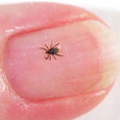
The size of the Lyme disease carrying tick.
Lyme borreliosis disease is a bacterial infection that is usually spread to humans by infected ticks. Ticks are tiny arachnids found in grassy woodland areas that feed on the blood of mammals such as deer, mice, dogs and humans.
However, it has been discovered recently that at least nine species of ticks, six species of mosquitoes, 13 species of mites, 15 species of flies, two species of fleas and numerous wild and domestic animals (including rabbits, rodents and birds) have been found to carry the Borrelia burgdorferi spirochete bacteria.
Lyme disease can also be transmitted through other means as well including breast milk, saliva and semen.
Lyme disease is caused by the intracellular spirochete bacterium called Borrelia burgdorferi. Intracellular means that the spirochete gets into the cell and therefore is not always available to the antibiotics.
The cell membrane inadvertently protects the bacteria and shields it from the antibiotics. The bacteria can also hide dormant in the nervous system, among other places, where antibiotic drugs cannot reach them.
Lyme disease was named after a cluster of cases that occurred in Old Lyme, Connecticut in the United States, in 1974 where physicians were treating an unusually large number of cases of what was first thought to be Juvenile Rheumatoid Arthritis. The disease may have various symptoms, the most common being a rash called erythema migrans. Today it is known that this is more than just a simple bacterial disease.

Many Lyme symptoms mimic other diseases, such as MS, Alzheimer’s, Rheumatoid Arthritis, Fibromyalgia, ALS (Lou Gerig’s Disease) and other autoimmune disorders as well as Parkinson’s and many other ailments, making it difficult to determine whether a patient has Lyme or another disease. Because of this mimicry, many Lyme patients go undiagnosed until they are in a more chronic state and some never get diagnosed at all.
Lyme disease is the most common tick-borne disease and, in general, is one of the fastest growing infectious diseases today. In the USA around 250,000 new cases are reported per year and the UK Health Protection Agency (HPA) estimates that there are 2,000 to 3,000 cases of Lyme disease in England and Wales each year, and that about 15%-20% of cases occur while people are abroad. But of course as mentioned earlier, many go undiagnosed and, in the UK, the standard tests called ‘Western Blot’ and ‘Elisa’ that are used to determine the presence of Lyme disease are unreliable.
Ticks become infected when they feed on birds or mammals that carry the bacterium in their blood. People who spend time in woodland or heath areas are more at risk of developing Lyme disease because these areas are where tick-carrying animals, such as deer and other carriers live.
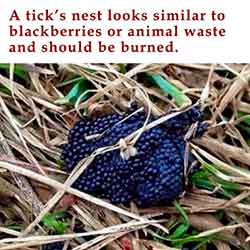
A tick nest looks similar to blackberries or animal waste and can be found on the ground in places where the animals it feeds upon are present such as deer. The best way to eradicate the ticks nest is to burn it.
Parts of the UK that are known to have a population of ticks that can carry Lyme disease include:
- Exmoor
- New Forest in Hampshire
- Richmond and Bushy Park
- South Downs
- Parts of Wiltshire and Berkshire
- Thetford Forest in Norfolk
- Lake District
- Devon
- Yorkshire Moors
- Scottish Highlands
Most tick bites occur in late spring, early summer and during the autumn because these are the times of year when most people take part in outdoor activities such as hiking and camping.
The Borrelia burgdorferi spirochete bacteria, that causes Lyme disease, can travel in the blood stream and infect any part of the body.
Possible symptoms of Lyme disease
- Anxiety, depression, irritability, mood swings, panic attacks, psychosis (hallucinations, delusions), paranoia
- Bipolar disorder
- Breast pain
- Breathlessness, ‘air hunger’
- Burning, numbness, stabbing or tingling sensations
- Carpel tunnel syndrome
- Chest wall pain or sore ribs
- Confusion, difficulty thinking, difficulty with attention and concentration, focus and reading, problem absorbing new information and searching for words and names
- Conjunctivitis (pinkeye)
- Constipation alternating with diarrhoea
- Dental pain
- Disorientation: getting lost, going to wrong places
- Double or blurred vision with floaters
- Ear pain, hearing problems, such as buzzing, ringing or decreased hearing
- Erectile dysfunction
- Exaggerated symptoms or worse hangover from alcohol
- Facial paralysis-Bell’s Palsy
- Fainting
- Fever and chills
- Forgetfulness, poor short term memory
- Flu-like feeling
- Headaches
- Head and sinus congestion
- Heartburn
- Heart murmur or valve prolapses, heart palpitations or skips
- Increased motion sickness
- Irritable bladder
- Insomnia, fractionated sleep, early awakening, excessive night time sleep, napping during the day, fatigue, tiredness
- Jaw (temporomandibular) disorders
- Joint pain, stiffness and/or swelling in ankles, back, elbows, fingers, knees, shoulders, hips, toes and/or wrists.
- Light and sound sensitivity
- Loss of libido
- Low abdominal pain and cramps
- Macular oedema
- Muscle weakness, pain and cramps
- Nausea and queasiness
- Neck pain, creaks and cracks
- Night sweats
- Numbness in the arms and/or legs
- Pain in genital area
- Persistent swollen glands
- Poor stamina
- Recurring Herpes/Zoster/Shingles attacks
- Skin hypersensitivity
- Skin rashes
- Sore soles of the feet (especially in the morning)
- Sore throat
- Speech errors, such as wrong words or misspeaking
- Sudden hair loss
- Tremors
- Twitching of the face or other muscles
- Unexplained back pain
- Unexplained chronic cough
- Unexplained menstrual irregularity or milk production
- Unexplained shooting pains
- Unexplained stomach pain
- Unexplained weight gain or loss
- Vertigo, spinning, off balance, light-headedness, wooziness, unavoidable need to sit or lie
NOTE: It is important to get tested for Lyme disease when symptoms of Parkinson’s disease appear as symptoms can be identical and are often misdiagnosed.
Lyme disease can be difficult to treat especially as tests are often carried out too early for a proper diagnosis. It takes at least six weeks for the body to produce the antibodies that will show up on a test for Lyme disease. The double conundrum is that unless it is treated early (within six weeks) with antibiotics they may not work as it can travel deep into the body where they cannot penetrate.
Symptoms may change and come and go for several years in some cases and, as yet, the medical profession has not fully accepted that Lyme disease can become chronic and often misdiagnose the above symptoms for some other disorder.
Nature cures for Lyme disease
It is important to have a blood test to check for deficiencies of zinc, the vitamin B complex and vitamin D as this can slow down Lyme recovery. Then improve the diet accordingly. See below to find out what foods to eat for these vital nutrients.
Probiotic foods can replenish the beneficial bacteria in the intestines that are wiped out by antibiotic Lyme disease treatment.
Probiotic foods that contain beneficial bacteria
- Brine pickles (eggs, fruit, nuts, seeds and vegetables that have been fermented by lactic acid bacteria)
- Kefir (fermented milk drink)
- Kimchi (a fermented, spicy Korean side dish)
- Kombucha (fermented black or green Asian tea)
- Miso (a Japanese fermented seasoning made with soya beans, salt and a type of fungus called koji)
- Sauerkraut (finely shredded cabbage that has been fermented by lactic acid bacteria)
- Tempeh (fermented soya beans)
- Yoghurt (plain with live cultures)
NOTE: It is advisable to consume probiotics at least an hour before other foods to enable enough friendly bacteria to survive and pass through the strong stomach acids.
Natural antibiotic remedies against the Borrelia burgdorferi bacteria
- Andrographis (Andrographis paniculata)
- Ashwagandha (Withania somnifera)
- Astragalus (Astragalus membranaceous)
- Banderol (Otoba acuminata, Otoba novogranatensis, Otoba parvifolia)
- Blood root (Sanguinaria canadensis)
- Blue flag ((Iris versicolor)
- Burdock root (Arctium lappa)
- Caraway seeds (Carum carvi)
- Cat’s claw (Uncaria tomentosa
- Cloves (Syzygium aromaticum, Egenia caryophyllata), coccinia (Coccinia indica, Coccinia cordifolia)
- Dandelion root (Taraxacum officinale)
- Echinacea (Echinacea angustifolia, Echinacea purpurea)
- Elderberry (Sambucus nigra)
- Fagara (Zanthoxyloides)
- Gotu kola (Centella asiatica)
- Japanese or Chinese knotweed root (Fallopia japonica, Polygonum cuspidatum)
- Land caltrop (Tribulus terrestris)
- Linden (Tilia cordata, Tilia platyphyllos)
- Liquorice root (Glycyrrhiza glabra)
- Mandrake (Mandragora officianarum)
- Moringa (Moringa oleifera)
- Nasturtium (Tropaeolum majus)
- Olive leaf extract (Olea europaea)
- Oregon grape root (Berberis aquifolium, Berberis vulgaris, Berberis aristata, Tinospora cordifolia)
- Pine needle tea (Pinus aphremphous, Pinus koraiensis, Pinus sabiniana, Pinus sibirica, Pinus sylvestris, Pinus taeda)
- Plantain (Plantago lancelota, Plantago major, Plantago ovato)
- Poke root (Phytolacca americana, Phytolacca decandra)
- Prickly ash (Zanthoxylum clava-herculis, Zanthoxylum americanum)
- Red clover (Trifolium pratense)
- Sarsaparilla (Smilax longiflora, Smilax regelii)
- Sassafras (Sassafras officinale, Sassafras albidum, Sassafras variifolium, Laurus sassafras)
- Stephania root (Stephania tetrandra)
- Suma root (Pfaffia paniculata)
- Yellow dock (Rumex crispus)
Gingko biloba can be used to clear the mental fogginess that is a common symptom of Lyme disease.
Milk thistle can help the liver which is important in the fight against Lyme disease.
Salt: Use Himalayan pink salt crystals in all meals can help to provide an environment that is inhospitable to pathogens and helps to make sure extra fluids are consumed as well as providing trace elements required to help the body fight the Lyme disease bacteria. However, high salt can also cause high blood pressure so care must be taken, and the blood pressure monitored when consuming extra salt.
NOTE: Never consume refined white table salt which is lacking in the required minerals or sea salt which has now been confirmed as containing microplastics from the polluted oceans.
Nutrients required to treat Lyme disease
The following nutrients can help to fight off the bacteria and repair the damage done by the infection.
Alpha lipoic acid and Lyme disease
Alpha lipoic acid works as an antioxidant in both water and fatty tissue enabling it to enter all parts of the nerve cell and protect it from damage and thus relieve peripheral neuropathy which can be caused by injury, nutritional deficiencies, chemotherapy or by conditions such as diabetes, Lyme disease, alcoholism, shingles, thyroid disease and kidney failure. Symptoms can include pain, burning, numbness, tingling, weakness and itching.
Highest food sources of alpha-lipoic acid in alphabetical order
- Brewer’s yeast
- Broccoli
- Brussel sprouts
- Flaxseeds
- Organ meats
- Peas
- Rice bran
- Spinach
- Swiss chard
- Tomatoes
- Watercress
NOTE: If suffering from reoccurring herpes, as can happen with Lyme disease, avoid Brewer’s yeast and all yeast products as this can bring on attacks as can mushrooms.
Chlorophyll and Lyme disease
Chlorophyll provides the body with better oxygen absorption, which will support the body overall and the Lyme disease bacteria do not thrive in an oxygen rich environment. In addition, it provides a safe amount of copper, which will make the body more toxic to pathogens. It will also give the colloidal silver better penetration, because silver will electro-chemically bind with the copper that is inside the chlorophyll.
Natural sources of chlorophyll
- All green leafy herbs and vegetables
- Algae and seaweeds such as chlorella and spirulina
- Aloe vera
- Ashitaba
Colloidal silver and Lyme disease
Colloidal silver is a natural and general purpose antibacterial, antifungal and antiviral compound that works electrically instead of chemically, so pathogens cannot develop any resistance to it.
Sulphur and Lyme disease
Sulphur: Consuming foods rich in sulphur can help relieve the joint pain and repair nerve damage that may have been caused by the Lyme disease bacteria as well as clear out toxins.
Highest sources of sulphur in milligrams per 100 grams
- Scallops 520 mg
- Lobster 510 mg
- Crab 470 mg
- Prawns 370 mg
- Mussels 350 mg
- Haddock 290 mg
- Brazil nuts 290 mg
- Peanuts 260 mg
- Cod 250 mg
- Oysters 250 mg
- Chicken livers 250 mg
- Cheese (parmesan) 250 mg
- Caviar (fish roe) 240 mg
- Peaches (dried) 240 mg
- Cheese (cheddar or stilton) 230 mg
- Salmon 220 mg
- Beef 220 mg
- Eggs 200 mg
- Apricots (dried) 160 mg
- Almonds 150 mg
- Rabbit 130 mg
- Walnuts 100 mg
- Peppercorns 100 mg
- Cabbage 90 mg
- Spinach 90 mg
- Brussel sprouts 80 mg
- Chickpeas 80 mg
- Figs (dried) 80 mg
- Coconut 80 mg
- Hazel nuts 80 mg
- Mung beans 60 mg
- Dates 50 mg
Vitamin B3 and Lyme disease
Vitamin B3 (niacin) can increase the deep tissue penetration of the herbal treatments and other nutrients and treatments, especially colloidal silver.
Highest sources of vitamin B3 in milligrams per 100 grams
- Yeast extract 127.5 mg
- Brewer’s yeast 40.2 mg (dependent upon source)
- Rice bran 34 mg
- Tuna fish (fresh) 22 mg
- Anchovies 19.9 mg
- Lamb’s liver 16.7 mg
- Chicken breast 14.8 mg
- Shiitake mushrooms 14.1 mg
- Peanuts 13.8 mg
- Tuna fish (tinned) 13.3 mg
- Spirulina 12.8 mg
- Calf’s liver 12.6 mg
- Chilli powder 11.6 mg
- Venison 10.8 mg
- Duck 10.4 mg
- Paprika 10 mg
- Sun dried tomatoes 9.1 mg
- Chia seeds 8.8 mg
The B vitamins and Lyme disease
B vitamins, particularly B6 (pyridoxine), B9 (folic acid), and B12 (cyanocobalamin) are known for healing damaged nerves.
Highest sources of vitamin B6 in milligrams per 100 grams
- Rice bran 4.07 mg
- Sage 2.69 mg
- Brewer’s yeast 1.50 mg
- Sunflower seeds 1.35 mg
- Wheat germ 1.30 mg
- Garlic 1.24mg
- Pistachio nuts 1.12 mg
- Tuna fish 1.04 mg
- Beef or calf’s liver 1.03 mg
- Shiitake mushrooms 0.97 mg
- Salmon 0.94 mg
- Turkey 0.81 mg
- Venison 0.76 mg
NOTE: Wild salmon (0.94 mg) contains far more vitamin B6 than farmed salmon (0.56 mg) and fresh salmon and tuna are far richer in vitamin B6 than tinned.
Highest sources of vitamin B9 in micrograms per 100 grams
- Yeast extract 3786 µg
- Brewer’s yeast 2340 µg
- Chicken livers 578 µg
- Basil 310 µg
- Wheat germ 281 µg
- Sunflower seeds 238 µg
- Soya beans 205 µg
- Spinach 194 µg
- Lentils 181 µg
- Chickpeas, pinto beans 172 µg
- Shiitake mushrooms 163 µg
- Parsley 152 µg
- Black beans 149 µg
- Peanuts 145 µg
- Navy beans 140 µg
- Asparagus 135 µg
- Turnip greens 118 µg
- Chestnuts 110 µg
- Beetroot 109 µg
- Spearmint 105 µg
- Chlorella and spirulina 94 µg
- Fish roe 92 µg
- Hazelnuts 88 µg
- Walnuts 88 µg
- Flaxseeds 87 µg
- Avocado 81 µg
- Mussels 76 µg
- Kidney beans 74 µg
- Peas 65 µg
- Broccoli 63 µg
- Brussel sprouts, okra 60 µg
- Quinoa 42 µg
- Papaya 38 µg
NOTE: One µg is one microgram.
Highest sources of vitamin B12 in micrograms per 100 grams
- Clams 98.9 μg
- Liver 83.1 μg
- Barley grass juice 80 μg
- Nori seaweed 63.6 μg
- Octopus 36 μg
- Caviar/fish eggs 20.0 μg
- Ashitaba powder 17.0 μg
- Herring 13.7 μg
- Tuna fish 10.9 μg
- Crab 10.4 μg
- Mackerel 8.7 μg
- Lean grass-fed beef 8.2 μg
- Duck eggs, goose eggs, rabbit 6 μg
- Crayfish, pork heart, rainbow trout 5 μg
- Shiitake mushroom 4.8 μg
- Lobster 4 μg
- Lamb, venison 3.7 μg
- Swiss Cheese 3.3 μg
- Salmon 3.2 μg
- Whey powder 2.37 μg
- Golden chanterelle mushrooms 2 μg
- Tuna 1.9 μg
- Halibut 1.2 μg
- Chicken egg 1.1 μg
- Chicken, turkey 1.0 μg
- Ashitaba 0.4 μg
NOTE: One µg is one microgram.
Vitamin D and Lyme disease
Vitamin D is vital for the immune system to work effectively and can often be deficient in people in the northern hemisphere due to lack of sunshine from October to April. The skin manufactures it from cholesterol using the sun’s rays but only stores enough for around 60 days so extra should be consumed in the diet from November until April. Covering up with clothes, sunscreen lotions and windows also block this process so extra will be needed in these cases too.
Highest sources of vitamin D per serving listed
- Krill oil – 1 teaspoon: 1000 IU
- Eel – 85 g or 3 oz: 792 IU
- Maitake mushrooms – 70 g: 786 IU
- Rainbow trout – 85 g or 3 oz: 540 IU
- Cod liver oil – 1 teaspoon: 440 IU
- Mackerel – 85 g or 3 oz: 400 IU
- Salmon – 85 g or 3 oz: 400 IU
- Halibut – 85 g or 3 oz: 196 IU
- Tuna – 85 g or 3 oz: 228 IU
- Sardines – 85 g or 3 oz: 164 IU
- Chanterelle mushrooms – 85 g or 3 oz: 155 IU
- Raw milk – 1 glass or 8 oz: 98 IU
- Egg yolk – 1 large: 41 IU
- Caviar – 28g or 1 oz: 33 IU
- Hemp seeds – 100 g or 3.5 oz: 22 IU
- Portabella mushrooms – 85 g or 3 oz: 6 IU
NOTE: One IU is the biological equivalent of 0.3 μg or 0.3 micrograms.
NOTE: The recommended daily allowance is 600 IU for ages 19 to 70 and 800 IU for ages 71 and over but this may be far below what should be taken and is dependent upon the amount of sunshine an individual’s skin is exposed to on a regular basis. Farmed salmon is often deficient in vitamin D.
Zinc and Lyme disease
Zinc is an important mineral when trying to eliminate the Lyme disease bacteria. Those drinking excess alcohol have low levels of zinc because alcohol decreases zinc absorption and increases urinary secretion of zinc. Diuretic medications also adversely affect zinc levels.
If an individual ingests excessive amounts of caffeine, drugs or sugar, it is more than likely that a zinc deficiency will develop. Low zinc levels can cause liver deterioration and diminished functioning of the reproductive organs, immune system and skin.
Highest sources of zinc in micrograms per 100 grams
- Oysters 78.6 mg
- Chlorella 71 mg
- Wheat germ 16.7 mg
- Beef 12.3 mg
- Calf’s liver 11.9 mg
- Hemp seeds 11.5 mg
- Pumpkin and squash seeds 10.3 mg
- Sesame and watermelon seeds 10.2 mg
- Bamboo shoots, endives and gourds 9 mg
- Chervil (herb) 8.8 mg
- Lamb 8.7 mg
- Venison 8.6 mg
- Alfalfa seeds (sprouted), amaranth leaves, Crimini mushrooms, Irish moss and tea 8 mg
- Crab 7.6 mg
- Lobster 7.3 mg
- Agave, basil, beefalo, broccoli, elk, emu, oats, ostrich, spinach and turkey 7 mg
- Cocoa powder 6.8 mg
- Asparagus, chicken livers, laver seaweed, mushrooms, parsley and rice bran 5.7 mg
- Cashew nuts 5.6 mg
- Pork 5.1 mg
- Jute (herb), lemon grass, mung beans, Portobello mushrooms, radishes and shiitake mushrooms 5 mg
- Agar seaweed, butterbur, cauliflower, chicory, Chinese cabbage, chives, coriander, green beans, lentils, lettuce, okra, rocket, spring onions, summer squash, Swiss chard, tomatoes and wasabi (yellow) 3.4 mg
- Peanuts 3.3 mg
- Cheddar cheese 3.1 mg
- Mozzarella cheese 2.9 mg
- Anchovies and rabbit 2.4 mg
- Cabbage, cucumber, jalapeno peppers, , kidney beans, navy beans, spirulina and turnip greens 2 mg
- Mussels 1.6 mg
- Arrowroot, artichokes (globe), beetroot, bell peppers, black eyed peas, borage, broad beans, Brussel sprouts, butter beans, cabbage, carrots, celery, chilli peppers, courgettes, dandelion greens, garlic, horseradish, kale, kelp, mustard greens, peas, pinto beans, potatoes, pumpkin, turnips, Swede, sweet potato, tomatoes (red), wakame (seaweed), watercress and winged beans 1.2 mg
NOTE: The recommended dietary allowance of zinc is approximately 15 mg daily for an adult. Do not exceed 100 mg of zinc per day from all sources. For more details about levels required for all life stages see>> Zinc
Diet to aid recovery from Lyme disease
A healthy diet is important to help the body fight off the Lyme disease bacteria. The ideal food to consume in one day which will include all the nutrients needed to fight off Lyme disease would be as follows.
Daily essentials
- Algae powder and dried seaweed flakes. One teaspoon of each sprinkled onto meals or in smoothies.
- Apple: One per day including skin
- Krill oil: Consume 1000 mg of red krill oil per day for essential omega-3 fatty acids and vitamin D
- Psyllium husks: Consume one tablespoon per day in a large glass of water or sprinkled onto meals as it can support digestion and excretory processes and will work within two days to fix many colon and digestive issues.
Before breakfast or any beverage
One teaspoon of pure locally produced organic honey stirred into a half cup of warm water with half a freshly squeezed lemon, a small pinch of chilli pepper and one tablespoon of apple cider vinegar.
Breakfast
- Apricots (dried and chopped)
- Blueberries or cranberries
- Kiwi fruit (chopped skin left on)
- The grated zest of half a lemon or one lime
- Flaxseeds (ground)
- Hempseeds (ground)
- Pumpkin seeds
- Mixed nuts including almonds (x 5), Brazil nuts (x 2) and walnuts (x 4 halves)
- Yoghurt (plain with live cultures)
Beverages throughout the day
- Four cups of green tea with freshly squeezed lemon or lime juice and any of the herbs listed above. Add three ground cloves to one cup of tea for additional Lyme disease fighting properties.
- Coconut water
- Pineapple juice
- One litre of bottled mineral water (drink one full glass last thing before sleeping)
- Cocoa made with goat’s milk and a teaspoon of pure local organic honey and a quarter teaspoon of nutmeg (drink before going to bed), This will aid sleep and provide the energy that the body needs to carry out repairs during sleep and cocoa is rich in zinc.
Snack when hungry
- Two hardboiled egg yolks (mashed)
- One avocado (mashed)
- Half a teaspoon of turmeric
- Dill (chopped fresh herb or a half teaspoon of dried dill)
- Himalayan pink salt crystals
- Peppercorns (ground)
- Half a tablespoon of apple cider vinegar
- Parmesan cheese (grated)
- Watercress (chopped)
- Pasta of choice (cooked)
Mix all the above in a bowl and keep refrigerated. Consume some whenever hungry. Make fresh every two days.
NOTE: Egg whites contain a protein called avidin that binds to vitamin B7 (biotin) and so can lead to a deficiency of this important nutrient. Remove egg whites before hard boiling the yolks.
To avoid wasting them why not whisk the whites until fluffy and use as a mask for dry skin or rashes that can be caused by Lyme disease. After applying leave on for five or 10 minutes then wash off and then use cold-pressed coconut oil as a moisturiser.
Lunch
- Shellfish or wild salmon
- Brown rice
- Basil
- Carrots (grated)
- Radishes
- Swiss chard or another choice of lettuce
- Tomatoes
- Peppercorns (ground)
Dinner
- Chicken or lambs liver cooked in cold-pressed coconut oil
- Onions
- Garlic
- Ginger
- Sage
- Coriander
- Aubergine (including skin)
- Peas
- Red bell pepper
- Spinach
- Sweet potatoes (including skin)
- Turnips or parsnips
- Himalayan pink salt crystals
- Peppercorns (ground)
NOTE: After chopping the onions and garlic, leave them to stand for ten minutes to allow the allicin to be produced. This is a powerful antibacterial, antifungal and antiviral compound the plant produces when it is damaged as a weapon against infections from microbes and has the same ability in the human body when consumed.
NOTE: Non-heme iron is found in tea and dark green leafy vegetables like spinach and kale. However, tea and green leafy vegetables also contain oxalates that block the absorption of iron. To assist the body in the absorption of non-heme iron eat a couple of strawberries, a kiwi fruit or some orange, tangerine or mango at the same time.
NOTE: To benefit from foods containing fat-soluble nutrients, such as the carotenoids in carrots, sweet potatoes and tomatoes, always eat together with oily foods like rapeseed oil, olive oil, fish, nut or other seed oils or avocado because carotenoids are fat-soluble, meaning they are only absorbed into the body along with fats and can then assist with the manufacture of the essential vitamin A nutrient.
Homemade natural tick repellent spray
In a spray bottle, mix 2 mugs of distilled white vinegar and 1 mug of water. To make a scented solution (to eliminate the vinegar odour) add 20 drops of any essential oil. Eucalyptus oil works as a tick repellent, while peppermint and citrus oils give off a strong crisp scent that also repel ticks and mosquitoes. Other tick repelling essential oils to use are:
- 10 drops rosemary essential oil
- 7 drops cinnamon essential oil
- 3 drops cedar wood essential oil
- 3 drops of rose geranium oil.
- 2 tablespoons of sweet almond oil
After mixing the solution, spray onto clothing, skin and hair before going outdoors. Reapply every four hours to keep ticks at bay and examine your skin and hair when back inside to make sure no ticks are on the body.
NOTE: Essential oil is not suitable for pregnant or breastfeeding women or pets such as dogs and especially cats.
Repellent for pets
For pets, add 1 mug of water to a spray bottle, followed by 2 mugs of distilled white vinegar. Then add two teaspoons of vegetable or almond oil which both contain sulphur (another natural tick repellent).
NOTE: Make sure to use sweet almond oil (Prunus dulcis var. dulcis) NOT bitter almond oil (Prunus dulcis var. amara) and never use any essential oils on pets.
Plants that repel ticks
Chrysanthemums have a high level of natural pyrethrins that repel ticks. Other plants that repel ticks are geraniums, lavender and peppermint. Using the essential oils of these plants diluted in a spray bottle of water can help to repel ticks but do not use where pets frequent.
Removing ticks
- Use fine-tipped tweezers to firmly grasp the tick very close to the skin.
- Don’t squeeze it as squeezing can speed up infection.
- With a steady motion pull the tick’s body away from the skin.
- Then clean skin with soap and warm water.
- Avoid crushing the tick’s body.
- Do not be alarmed if the tick’s mouthparts remain in the skin. Once the mouthparts are removed from the rest of the tick, it can no longer transmit disease.
- If the tick is crushed, clean the skin with soap and warm water or alcohol.
- Don’t use petroleum jelly, a hot match, nail polish or other products to remove a tick
For many natural remedies to alleviate the pain that can be caused by Lyme disease see>> Pain and inflammation
Related subjects
- A-Z of ailments
- Anti-microbial healing plants and foods
- Bacterial infections and natural antibiotics
- Feed your friendly bacteria
- Mosquito-borne infections
- Nerve disorders
- Parasites
- Viris infections

Join our mailing list to receive your monthly emailed newsletter with all the latest scientific findings for natural health remedies.