
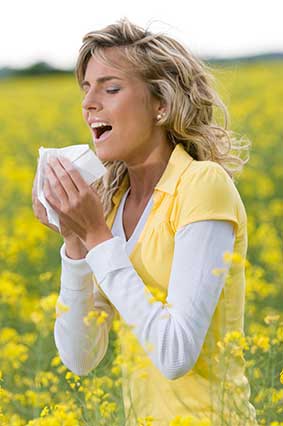
Hay fever is an allergy which develops when the immune system mistakenly identifies a harmless airborne substance as something harmful. The immune system starts producing antibodies to this harmless substance.
The next time this substance comes into contact with the lining of the mouth, nose and throat these antibodies recognise it and signal the immune system to release chemicals, such as histamine, into the bloodstream.
These immune system chemicals cause a reaction that leads to the irritating signs and symptoms of hay fever. Hay fever is more prevalent in people who are physically inactive
Hay fever is never caused by hay, nor does it cause fever as the name suggests.
Usual culprits that can cause hay fever
- Dander (dried skin flakes), hair and saliva from pets such as cats, dogs or birds is common all year round.
- Dust mites or cockroaches can occur all year round.
- Grass pollen is common in spring and summer.
- Perfume, aftershave and air fresheners
- Ragweed pollen is common in autumn.
- Spores from indoor and outdoor fungi and moulds
- Tree pollen is common in spring. Usually different trees release pollen at different times throughout spring, but if the weather has been particularly cold, the trees may wait, and all will release their pollen at the same time which is particularly unpleasant for the hay fever sufferer.
Although hay fever can begin at any age, it is usually developed it during childhood or early adulthood. It’s common for the severity of hay fever reactions to change over the years. For most people, hay fever symptoms tend to diminish slowly, often over decades.
Sneezing activates the pharyngeal and tracheal muscles involving the face, throat, and chest muscles. The sneeze reflex involves contraction of a number of different muscles and muscle groups throughout the body, typically including the eyelids. Any of these muscles can be strained when sneezing constantly.
Acidity in the body and hay fever
Address the acid and alkaline balance in the body. Check the pH of your saliva with pHydrion paper. If the saliva pH is below 7.2 then you may have an imbalance of the bacteria flora in the intestines. To increase your oral pH to a normal 7.2 or greater, drink one teaspoon of bicarbonate of soda in two ounces of cooled boiled water. It is that easy to neutralise the acids that can cause the following health issues:
- Anaemia
- Bacterial infections
- Halitosis
- Hay fever
- Intestinal flora imbalances see>> Feed your friendly bacteria
- Mouth sores
- Oral cancer
- Tooth cavities and decay
- Worms and parasite infections
- Virus infections
- Yeast infections
Cleaning teeth with bicarbonate of soda after eating and avoiding commercial powerful chemical laden toothpastes and mouthwashes which can also help readdress the balance.
NOTE: As bicarbonate of soda is high in sodium those with high blood pressure should not consume bicarbonate of soda. A single teaspoon can contain approximately 1,200 to 1,260 milligrams of sodium, which is close to or exceeds the daily recommended intake for individuals with high blood pressure.
Natural ways to avoid hay fever
Dry sheets and clothes indoors – never hang clothes outside to dry in summer if suffering from hay fever
Antioxidants: in particular flavonoids found in virtually all fresh vegetables, prevent the release of the inflammatory chemical histamine from immune cells. See>> Antioxidants
Rutin is especially effective against hay fever.
Foods rich in rutin
- Apples (especially the peel)
- Apricots
- Asparagus
- Buckwheat (especially the leaves)
- Capers
- Cherries
- Citrus fruits (lemons, limes, oranges and tangerines)
- Prunes
The above rutin-rich foods should be consumed along with foods rich in in the following nutrients:
- Hesperidin found in citrus fruits
- Vitamin C
- Vitamin E
Butterbur reduces inflammation, blocking histamines and leukotrienes. Studies suggest the herb is effective for relieving sneezing, itchy eyes, sinus congestion and headaches. People allergic to ragweed or chrysanthemum should avoid butterbur.
Carotenoids found in orange and green plant foods promote freedom and openness in the airways. See>> Colour codes of nature. Always consume foods rich in fat soluble carotenoids with a little oil or fatty foods like nuts, avocado or fish in order to absorb them efficiently.
Capsaicin: Cayenne chilli pepper contains capsaicin which thins mucous in the nasal passageways and sinuses and makes breathing easier when a person is suffering from hay fever, a sinus infection or the common cold. Add cayenne pepper to a tea as it stimulates drainage of nasal mucus and reduces cold and allergy symptoms. Take one quarter to half teaspoon of cayenne pepper steeped in a cup of hot water.
NOTE: Cayenne pepper has powerful natural anti-coagulant properties similar to the actions of aspirin or blood thinning medication. It is advisable to take less of these medications if regularly consuming cayenne pepper.
Chamomile tea is reputed to relieve hay fever symptoms. Some herbalists suggest smearing chamomile and lemon oil on a tissue and inhaling to prevent hay fever symptoms.
Ginger and fresh lemon tea and raw locally produced honey works to break up chest congestion and loosen phlegm. It strengthens the immune system and acts as a natural antihistamine.
Green tea blocks the production of histamine and is one of the best homemade remedies for building the immune system.
Honey that has been produced by local bees can effectively prevent hay fever when taken before the hay fever season starts.
Horseradish, basil and garlic can provide relief for hay fever.
Lemon balm leaf tea with mint or peppermint leaves and a teaspoon of locally produced honey, can eliminate hay fever symptoms. To make a tea, pour hot water onto a handful of all the leaves in a jar. Screw on the lid and then cool and leave to chill for four hours in the refrigerator. Then gently reheat, strain the leaves out and add a teaspoon of honey. Sip this tea three times a day.
Omega-3 fatty acids: can reduce the production of inflammatory chemicals in the body which makes it very effective in combating the symptoms and treating the causes of hay fever.
Highest sources of omega-3 fatty acids in milligrams per 100 grams
- Krill oil 36000 mg
- Flaxseed oil 22813 mg
- Chia seeds 17552 mg
- Walnuts 9079 mg
- Caviar (fish eggs) 6789 mg
- Cloves (ground) 4279 mg
- Oregano (dried) 4180 mg
- Marjoram (dried) 3230 mg
- Tarragon (dried) 2955 mg
- Mackerel 2670 mg
- Herring 2365 mg
- Salmon (wild) 2018 mg
- Lamb 1610 mg
- Basil (dried) 1509 mg
- Sardines 1480 mg
- Anchovies 1478 mg
- Soya beans 1433 mg
- Trout 1068 mg
- Pecans, sea bass 986 mg
- Pine nuts 787 mg
- Bell peppers (green) 770 mg
- Oysters 740 mg
- Radish seeds sprouted 722 mg
- Krill oil 400 mg
- Purslane 400 mg
- Basil (fresh leaves) 316 mg
- Rabbit 220 mg
- Kidney beans 194 mg
- Wakame seaweed 188 mg
- Alfalfa sprouts 175 mg
- Brussel sprouts 173 mg
- Rocket 170 mg
- Cauliflower 167 mg
- Spinach 138 mg
- Broccoli 129 mg
- Raspberries 126 mg
- Lettuce 113 mg
- Blueberries 94 mg
- Summer squash 82 mg
- Strawberries 65 mg
- Milk 75 mg
- Eggs 74 mg
- Chinese cabbage (pak choy) 55 mg
- Parsnips 49 mg
Buy pure Antarctic krill oil 2000 mg capsules from Amazon
Related subjects

Join our mailing list to receive your monthly emailed newsletter with all the latest scientific findings for natural health remedies.