
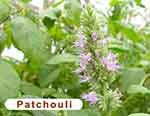
Also known as Pogostemon cablin, Herba pogostemonis, green leaf or guang huo xiang.
Patchouli is an aromatic, bushy herb of the mint family native to the tropical regions of Asia and is still cultivated extensively across much of Asia today. The word ‘patchouli’ means ‘green leaf’ in Indian. It grows best in hot climates but not direct sunlight and is able to withstand periods of little water. The flowers have a powerful fragrance and bloom in late autumn.
It is mostly grown for its highly aromatic essential oil which is extract using distillation and then used in cosmetics, Indian incenses, perfumes and potpourris. It has a deeply musky scent which is said to be an antidepressant and stimulant and can cover unpleasant odours very effectively.
Patchouli blends well with other fragrances such as basil, bergamot, geranium, jasmine, juniper, lavender, myrrh, neroli, pine, rose, sandalwood and vanilla and was a favourite fragrance during the 60’s and 70’s hippy movement.
A tea can be made with dried leaves of the patchouli and is often used in Chinese medicine to treat the following conditions:
- Bloating and flatulence
- Colds, coughs and influenza
- Diarrhoea
- Headaches
- Intestinal disorders
- Meniere’s syndrome (vertigo, tinnitus and deafness)
- Nausea
It has powerful antibacterial properties and can promote the secretion of gastric juices, enhance the digestion, relieve gastrointestinal spasms, dilate the capillaries and induce perspiration. It is sometimes used with galangal root to treat malaria.
Patchouli leaf and tangerine peel can also be used to treat the profuse watery diarrhoea and vomiting caused by cholera.
Related subjects
- A-Z of natural foods and remedies
- Bacterial infections and natural antibiotics
- Blood and vein disorders
- Ear disorders
- Excretory system disorders

Join our mailing list to receive your monthly emailed newsletter with all the latest scientific findings for natural health remedies.